





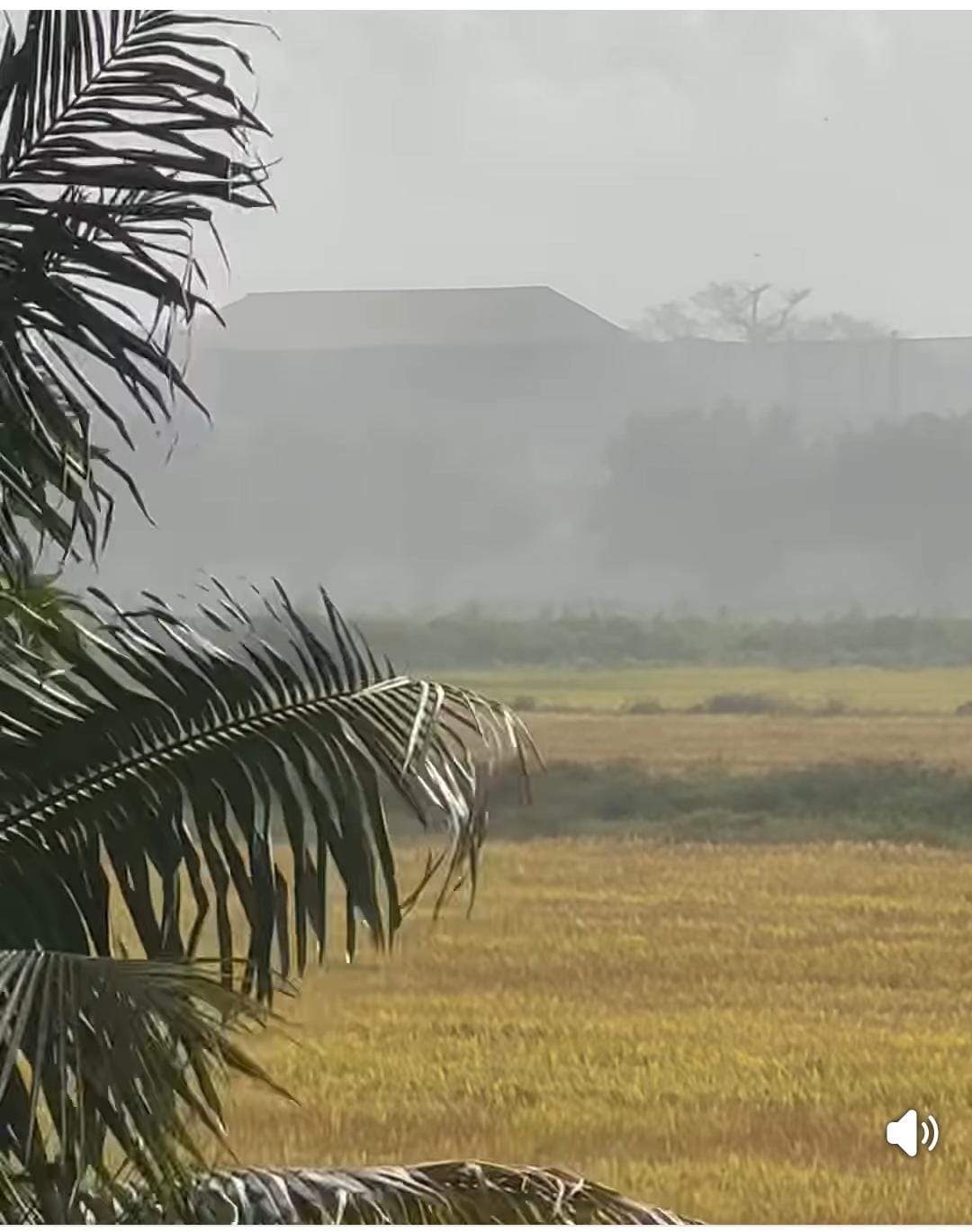
Frustrated residents of Fairfield and Vilvoorden on the Essequibo Coast are accusing the Environmental Protection Agency (EPA) of “abandoning” them. The say that despite years of protests and reported court mandates, the Golden Fleece Rice Mill continues to blanket their community in hazardous dust. Efforts to reach EPA CEO Kemraj Parsram for clarification on the status of the legal matters and the enforcement of the December 2025 deadline were unsuccessful.
The long-standing dispute between the villagers and the mill, owned by businessman Nazemul Hakh, continues onwards this week as community members alleged that mitigation efforts were merely “a show” designed to mimic compliance without providing actual relief.
According to Abdool Saib Shameer, a spokesperson for the affected residents, the EPA has not been seen in the community for months. While previous reports indicated the agency had taken the miller to court, residents remain in the dark regarding the outcome.
“When I went to court for throwing dust on the staff at the mill, the magistrate did mention that EPA has them in court, but we didn’t hear back anything,” Shameer told the Guyana Standard. “We don’t know what’s happening. The last we heard, the EPA withdrew the case without any explanation to us. Why are the ones filing the case withdrawing it?”
In a Facebook post, Shameer addressed claims that residents moved into an industrial zone.
“THE VILLAGERS WERE HERE LONG BEFORE THE RICE MILL,” Shameer posted. “But now the Hakhs are blaming the EPA and NDC for THEIR lack of compliance, for THEIR oppression and for THEIR POLLUTION that is affecting the lives of villages claiming that they allowed the villagers to build their homes around the rice mill.”
Shameer further alleged that for five years, an “illegal operation” has been allowed to run while authorities fail to intervene, calling the situation a “disregard for the lives of people” sanctioned by the government.
Residents have grown increasingly cynical of the “remedies” implemented by the mill. Shameer described the use of fire trucks to dampen the dust as ineffective and performative.
“The fire truck was only doing the front part of it. It was just a show. It wasn’t anything effective,” he said, adding that the mill continues to operate while the EPA’s suggested upgrades remain uninstalled.
The impact on the ground is visible and physical. Families report cleaning dust from their homes daily. More concerningly, the community, which includes infants and the elderly, claims a rise in respiratory issues and chronic allergies.
The tension has even led to legal repercussions for the villagers themselves. Two residents were previously detained by police following a heated protest against the pollution.
While the rainy season during Christmas holidays provided temporary relief by dampening the massive heaps of paddy husk, Shameer warns that this is a “false calm.”
He noted that while the top layer of the husk is wet, the core of the massive heaps remains burning and smoldering.