





For decades, the flow of illicit gold in the Amazon Basin followed a predictable compass: Venezuelan gold smuggled into Guyana and Brazil to wash it of its origins, evade international sanctions, and access the stability of the U.S. dollar. However, a groundbreaking new report by the Global Initiative Against Transnational Organized Crime (GI-TOC) reveals a reversal. Guyana’s gold is flowing into Venezuela, drawn by a premium price paid by the Venezuelan military and facilitated by a sophisticated network of trucks, small aircraft, and cryptocurrency.
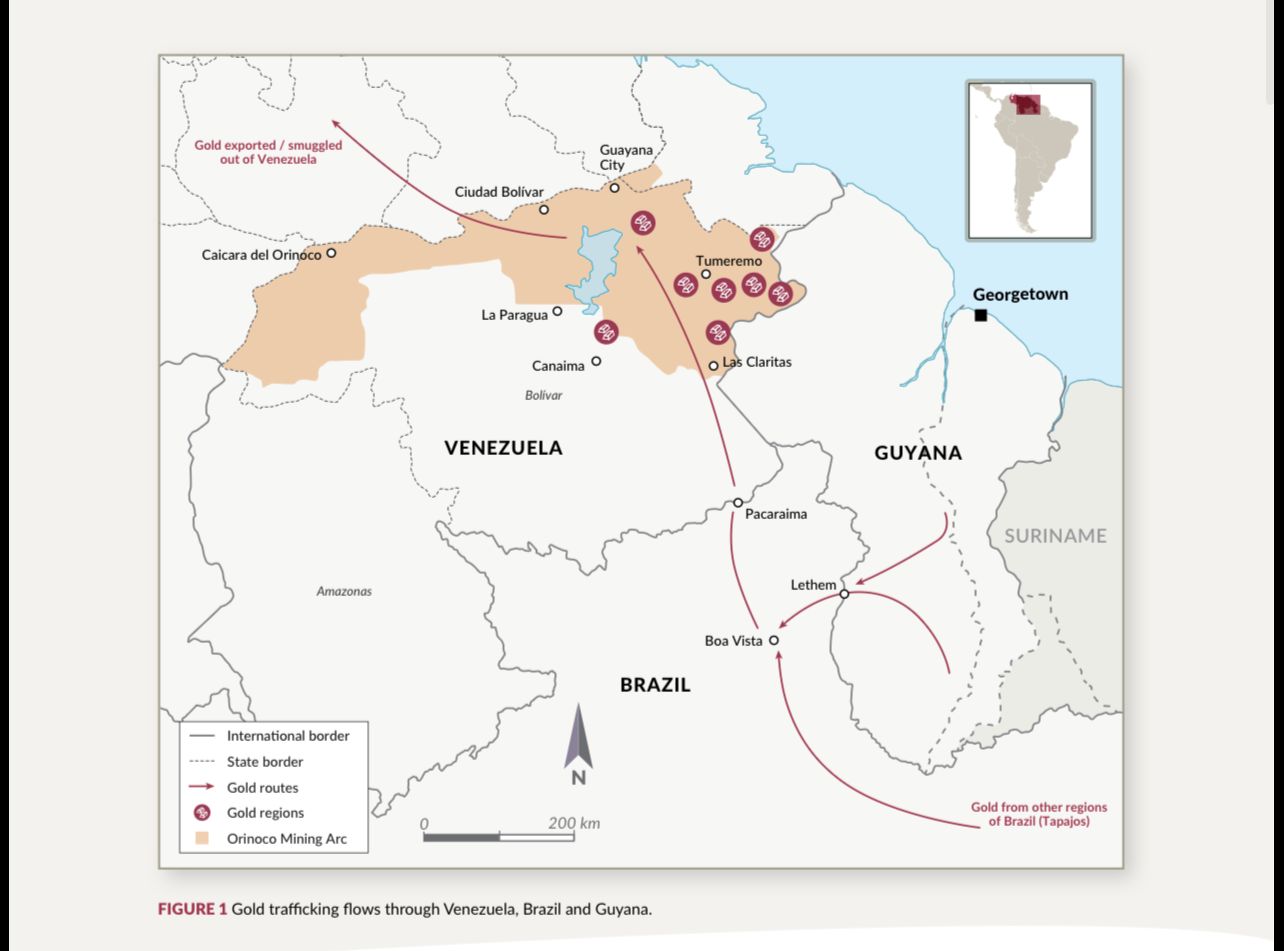
The GI-TOC brief seen by this publication, Shifting Amazon Gold Flows, highlights how regulatory crackdowns in Brazil and rising international prices have transformed Venezuela into a regional magnet for illicit gold. In 2023, Brazil introduced strict new monitoring of purchase points, leading to an 84% decline in artisanal gold production. With the Brazilian market tightened, illicit flows from Guyana and the wider Amazon have pivoted toward the Orinoco Mining Arc in Venezuela.
Historically, Venezuelan gold was smuggled into Guyana to access US dollar markets, but the report states that in 2024 and 2025, gold was smuggled from Guyana into Venezuela for sale.
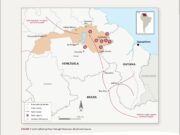
According to judicial and law enforcement sources cited in the report, this is no longer a disorganized scramble by pork-knockers. It is a highly coordinated operation where Boa Vista, Brazil, has emerged as the central node.
Gold from Guyana’s Lethem border crossing is transported by road in private vehicles and trucks, often stashed in hidden compartments behind media players or near wheel wells. Shipments ranging from 20kg to 100kg are aggregated in Boa Vista before being moved unchecked through the Pacaraima border crossing into Venezuela. High-ranking Venezuelan military officials are reportedly paying an 8% premium over the international gold price to lure traffickers and tighten their grip on the regional supply. A judicial official in the border area described it as a well-oiled machine with long-standing political backing, armed force, and the ability to move seamlessly across countries.
The report raises particular alarm regarding the Cuyuní River, a vital artery through the gold-rich northern midlands of the disputed Essequibo region. This area has become a primary corridor for Venezuelan organized crime groups moving into the Guyanese sector. Local sources indicate that these groups have shifted from merely managing migration to extorting miners and controlling extraction sites. The lack of border patrols and the sheer vastness of the terrain have allowed these complex illicit networks to operate with near impunity.
The investigation also touches on the sensitive issue of political protection. In Guyana, concerns persist regarding high-profile figures and their connections to the trade. The report mentions Operation GoldDigger and past U.S. Embassy reports that named significant local players, yet resulted in little domestic legal action. Furthermore, social media has become a brazen gallery for these illicit actors. Groups like Cataratas and Maserati reportedly flaunt their wealth on TikTok, posting videos of helicopters taking off from remote mining regions, often appearing to boast of their connections to governing elites and regulatory bodies like the Guyana Geology and Mines Commission.
As the U.S. weighs further interventions and sanctions, the illicit trade is already adapting. The GI-TOC research confirms that much of the gold originating from Guyana is now being settled in Tether (USDT), a cryptocurrency stable coin pegged to the U.S. dollar. This shift to digital currency allows traffickers to bypass traditional banking systems and evade sanctions entirely, making the financial trail nearly impossible to track.
Stabroek News previously reported that Minister of Natural Resources Vickram Bharrat stated he was unaware of any use of cryptocurrency here to enable gold smuggling. He offered a terse “no” when asked by Stabroek News. Meanwhile, the Director of the Financial Intelligence Unit (FIU) Matthew Langevine said that no specific reports on this activity had been received for 2024.
However, the Director noted that legislation exists which bans such untraceable virtual currency activities. “The government has passed legislation in the compliance commission act of Guyana in 2023… there is a provision which prohibits any type of virtual activity in Guyana because there is no regulatory body in place to supervise or manage those activities.” The FIU Director confirmed that Suspicion Transaction Reports (STRs) they do receive lead to intelligence reports, which are then disseminated to law enforcement.
The “very significant majority” of these reports go to the Special Organised Crime Unit (SOCU), with smaller scale reports going to the Customs Anti-Narcotic Unit (CANU) and the Guyana Revenue Authority (GRA). However, SOCU’s head, Fazil Karimbaksh, recently told the newspaper that his unit does not handle reports from the FIU. Sources told Guyana Standard that the illicit trade between buyers and Guyanese smugglers operates using a sophisticated payment system rooted in cryptocurrency.
Specifically, the buyers pay the Guyanese smugglers in US Dollars by transferring stable coins like Tether (USDT), utilizing various token standards such as Bitpie TRC, Bitpie ERC, and Eterium to complete the transactions. Once the payment is settled in the smugglers’ virtual wallets, the conversion process begins through an established shadow financial system. The smugglers then take this US dollar-backed cryptocurrency to an underground network of Chinese banks operating within Guyana. This network acts as the conversion mechanism, effectively exchanging the virtual currency into physical Guyana dollars for the smugglers. The source said the method of financial settlement has a critical negative impact on Guyana’s national economy. By channeling US dollars through virtual currency wallets and the subsequent Chinese underground network, these foreign currency funds entirely bypass the official Guyana banking system. As a direct consequence, the Bank of Guyana (BOG) is prevented from receiving its legitimate foreign currency payments, which significantly contributes to the severe foreign currency shortage currently plaguing the local economy. The Chinese underground banking system then pays the smugglers in Guyana dollars. The source indicated that while Binance was previously used, smugglers have since opted for alternatives, as it was realised that law enforcement could potentially track the activity on that platform, adding that the Chinese network is seen as a more secure option for these illicit transactions. The fallout of this shifting trade extends beyond lost tax revenue. The GI-TOC warns that unregulated mining continues to devastate the Amazonian ecosystem, while gold proceeds are directly funding armed groups and corrupt military structures. Additionally, the influx of Venezuelan criminal elements into Guyanese territory threatens the safety of local indigenous communities and small-scale miners.
The GI-TOC is expected to release a more detailed country profile on Guyana and Suriname in May 2026. For now, the message to regional governments and the international community is clear, monitoring national markets is no longer enough. The brief concludes that monitoring should prioritize regional supply chains over national markets. Without a coordinated crackdown on the logistics nodes in places like Boa Vista and Lethem, and a serious look at the corrupt relationships involving military and political officials, the Amazon’s gold will continue to fund the very instability the region fears most.