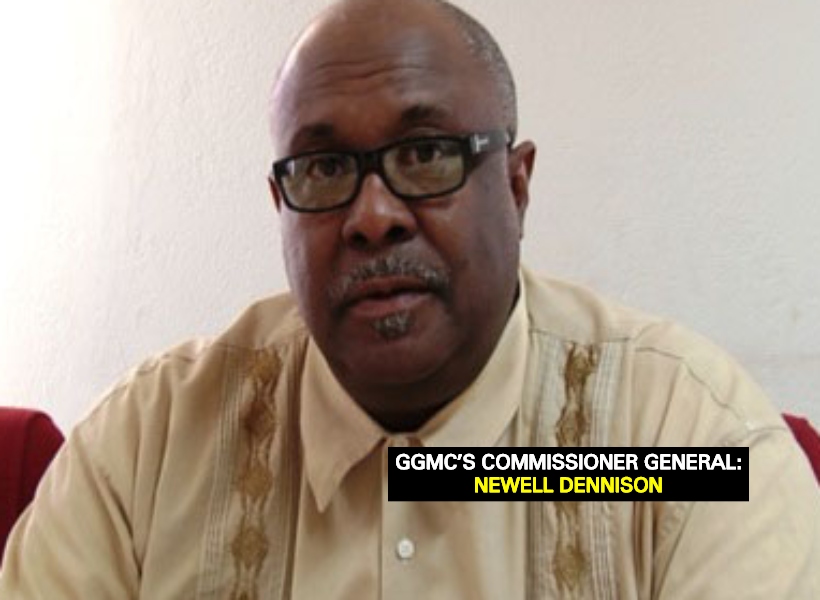





The Commissioner of the Guyana Geology and Mines Commission (GGMC), Newell Dennison yesterday issued a formal brief in an effort to clarify the operational status of the Marudi Gold Project in South Rupununi, addressing recent media scrutiny and “unverified” narratives surrounding the site’s security and production. The project, centered at Mazoa Hill and encompassing Marudi Mountain and Toucan Creek, has transitioned from years of administrative instability to a structured alliance involving the government and local miners.
Addressing concerns over restricted access to the Mazoa Hill site, the Commissioner emphasized that such measures are a standard industry requirement for safety and security.
“There should be nothing controversial about the restricted access,” the Commissioner stated, noting that similar restrictions exist for bauxite, manganese, quarry, and petroleum operations across the country. He cited the historical precedent of the former Omai Gold Mines as one of the nation’s most restricted sites.
The GGMC head clarified that the restrictions are not targeted at any specific group or individual. Instead, access is granted based on financial, technical, or operational involvement. He further noted that “privileged officials” on state business, such as the parliamentary subcommittee for natural resources, would be granted access through established authorized protocols.
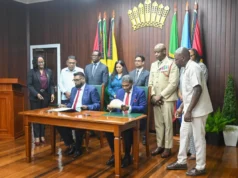
The brief posted on GGMC’s facebook page highlighted a shift in the project’s management since 2020. Previously, the area was plagued by “substandard operations, unsafe experiences,” and criminal activity due to competing factions. Under the direction of Minister of Natural Resources, Vickram Bharrat, a new agreement was forged between the Ministry, the GGMC, and the tenure holder, Oras Guyana Inc. This arrangement facilitates mining through an association of approximately 40 Rupununi miners operating under a special mining permit. The Commissioner strongly refuted allegations of gold smuggling from the site, describing the narrative as having “no merit.”
To mitigate illicit movement, the Guyana Gold Board (GGB) remains permanently embedded at the project site. “All gold extracted has to be declared to the Guyana Gold Board,” the Commissioner explained, adding that officers are on-site to assess product recovery and ensure strict compliance.
The GGMC argued that the scale of smuggling alleged by some commentators is technically and logistically unfeasible.
“Any student of mining should be able to calculate and demonstrate that what is being portrayed cannot be sustainable, nor is it viable; it would require movement of material and grades of ore that would be exceptional indeed.” The GGMC urged those in positions of influence to rely on verified facts rather than “convenient hearsay.” The Commissioner defended the “dedicated, responsible officers” working under difficult conditions in the South Rupununi District, asserting that the project has brought positive commercial and economic growth to the region over the last three years.
“Let us all recommit to being fair-minded and civil,” the Commissioner concluded, “especially when doing better and best are not typically the easiest options to choose.”