




Speaking during an interview on Tuesday, Guyana Livestock Development Authority (GLDA) Chief Executive Officer, Dr Dwight Walrond described recent claims circulating in sections of the media as “completely false” and politically motivated.

He said the allegations were intended to create unnecessary alarm and undermine public confidence in the agriculture sector.
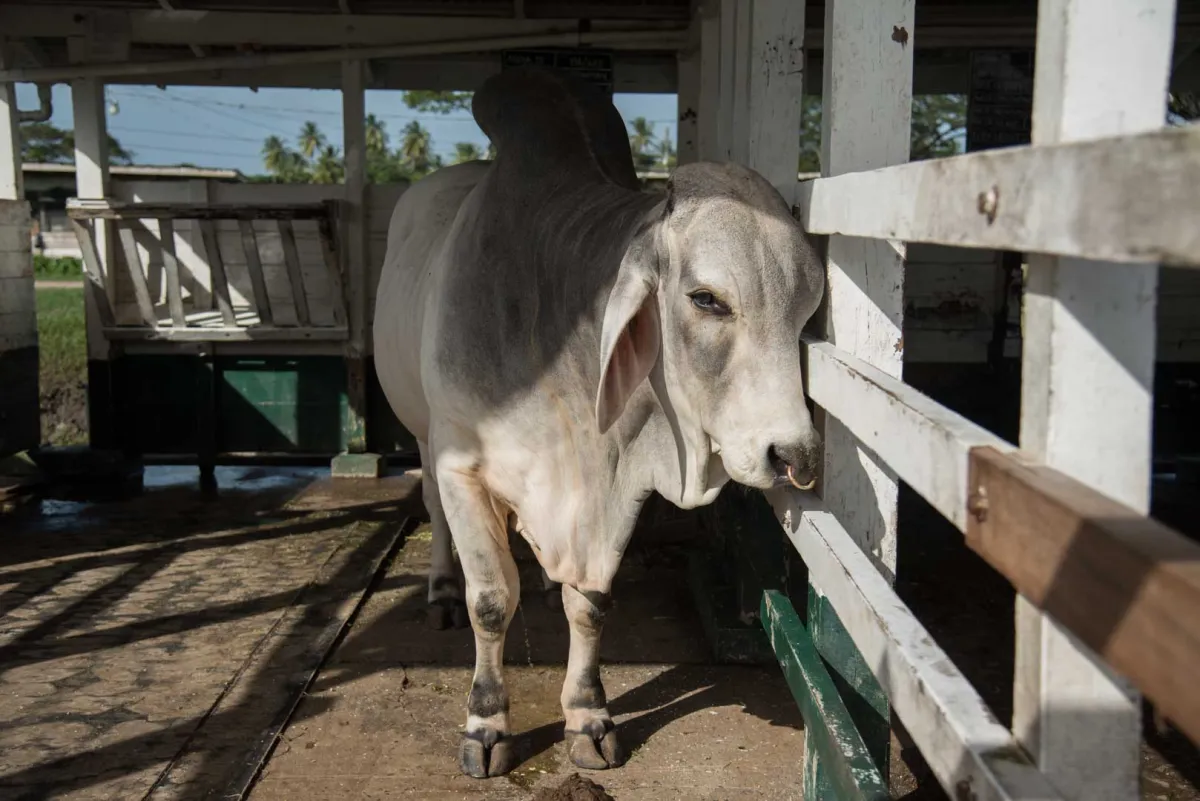
“The Onverwagt abattoir remains operational and continues to provide slaughtering and related services to livestock farmers. Anyone can gain access and benefit from the services there,” Dr Walrond said.
He detailed that the abattoir has processed cattle supplied mainly by farmers from Regions Four, Five, Six, Nine and Ten, along with limited imports from Bonfim, Brazil, through approved legal importation channels.
Butchers are charged a minimum fee of $3,000 per head for slaughtering services.
“To date, the abattoir has produced in excess of 112,000 kilograms of beef. These are verifiable figures and demonstrate that the facility is functioning and contributing to the growth of the sector,” he stated.
He acknowledged that the level of activity at the facility varies depending on market demand, seasonal livestock supply and local consumption patterns.
“There are periods during the year when the consumption of animal-based protein is significantly reduced,” he explained.
Dr Walrond said the government has continued to invest in livestock infrastructure to support farmers rather than allowing facilities to deteriorate.
He also dismissed claims that widespread cattle deaths have gone unaddressed following recent heavy rainfall.

The authority operates an active veterinary surveillance programme across all ten administrative regions, providing disease monitoring, vaccination campaigns, diagnostic support, extension services and emergency response.
He said the agency’s decentralised system allows officers to regularly visit communities, including neighbourhood democratic councils (NDCs), to address the concerns of farmers.
Over the past several months, Dr Walrond said the GLDA’s surveillance department provided support to 1,137 farmers, while more than 34,000 animals received welfare interventions and relief assistance.
“Livestock production, like every agricultural activity, faces occasional challenges, but to suggest that the authority is absent or indifferent is a gross distortion of the reality,” he stressed.
The CEO argued that misinformation for political purposes does not benefit farmers or the wider livestock industry as he reiterates the visionary leadership of the government.
He said the government has invested billions of dollars in drainage and irrigation systems, farm-to-market roads, livestock development, veterinary services, aquaculture and genetic improvement programmes.
In addition, investments in livestock genetics are among the most significant in the Caribbean Community (CARICOM).
Meanwhile, the government remains commitment to transparency and accountability, adding that allegations of wrongdoing should be supported by credible evidence and reported through the appropriate institutions.
“Reckless accusations made for political headlines cannot replace facts, and they cannot replace science, because our decisions are evidence-based,” Dr Walrond said. (Department of Public Information)