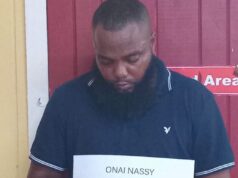



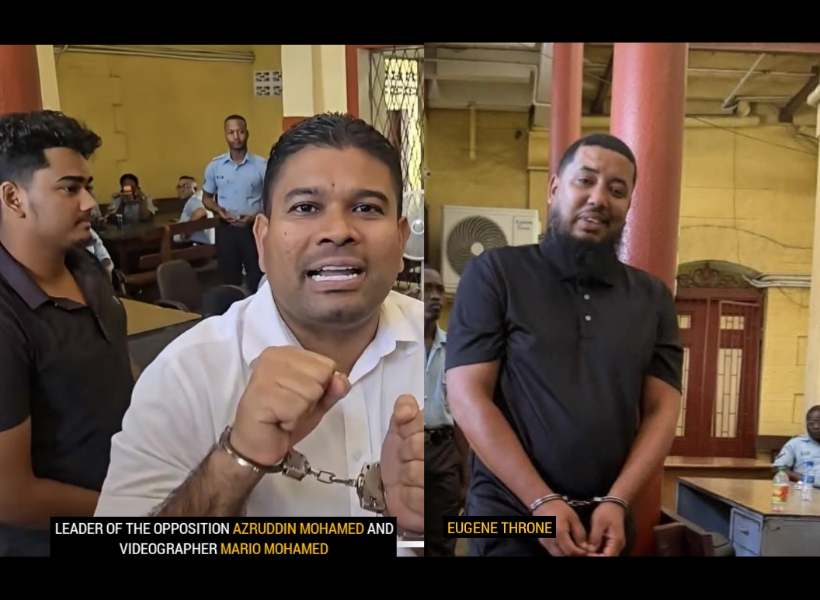
Leader of the Opposition Azruddin Mohamed and his two employees were granted bail in the sum of $750,000 each for the charges of unlawful possession of firearm, unlawful possession of ammunition and attempt to obstruct the course of justice.
Azruddin, his driver Eugene Throne and videographer Mario Mohamed, appeared before Magistrate Faith McGusty in the Georgetown Magistrate’s Court on Friday morning where they were jointly charged. The men were granted bail at $250,000 on each of the charges. The men are accused of a shooting incident that occurred at Bar Street Kitty at the residence of Head of the Guyana Police Force’s Special Branch, Senior Superintendent Prem Narine.
Azruddin was represented by attorney-at-law Siand Dhurjon. Dhurjon challenged the prosecution stating the car was first searched at the scene without anything being found, but the firearm was reportedly discovered later at the police station after officers had taken possession of the vehicle. Dhurjon said a special branch rank drove the car to the station and that the defendants’ phones were seized.
Dhurjon further cited social media video footage that he said appeared to show an officer retrieving a firearm during the search, and alleged the weapon may have been planted.
The defence also criticized the absence of CCTV evidence, arguing that prosecutors had not shown footage proving shots allegedly fired during the incident came from the accused men’s vehicle.
Dhurjon requested the ballistic examination results along with preservation and disclosure of surveillance footage.
The charges surround a single firearm, the attorney questioned the possibility of how all three men can use one firearm at the same time.
Throne was represented by attorney-at-law Damien DaSilva, while Mario was represented by Senior Counsel Roysdale Forde. The prosecution expressed concerns that the charges against the men lacked sufficient evidence to establish that they had discharged a firearm.
As part of their bail conditions, the three men must surrender their passports and avoid all contact with prosecution witnesses, including Narine and his immediate family. They are also prohibited from visiting Narine’s residence and must inform the court of any change of address. Any travel requires prior approval from the court.