





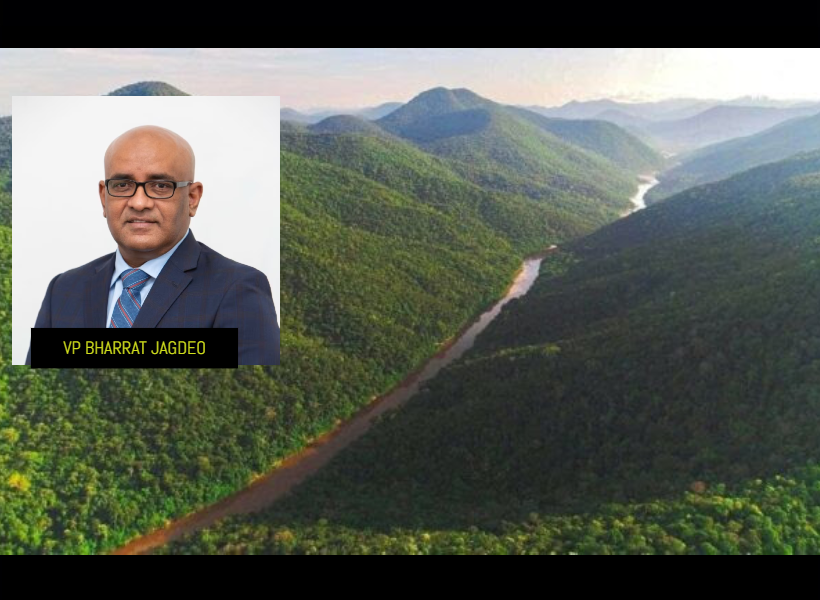
“The key to faster progress is finance,” Dr Jagdeo told a high-level gathering at the United Nations COP31 climate summit, during an event co-hosted by Guyana, Brazil, Norway, the Republic of the Congo and the United Kingdom.

Dr Jagdeo, who was welcomed to the summit by President Recep Tayyip Erdoğan of Türkiye and the United Nations Secretary-General António Guterres, said forest-rich developing countries needed predictable financial rewards for preserving ecosystems that benefit the entire planet.
Guyana, where forests cover approximately 85 per cent of the territory, has pursued that approach since 2007, when Dr Jagdeo, then president, proposed protecting nearly all of the country’s rainforest in exchange for international financial support.
The initiative evolved into Guyana’s Low Carbon Development Strategy, initially supported by a Norwegian pledge of up to $250 million and later expanded through carbon markets.
In 2022, Guyana became the first country to receive carbon credits for forest protection on a nationwide basis.
Hess, the American oil company subsequently acquired by Chevron, agreed to purchase at least $750 million in credits over 10 years. Dr Jagdeo said the programme was expected to generate more than $100 million in 2026, with over 30 airlines also purchasing Guyanese forest carbon credits.
He said Guyana had maintained a deforestation rate of approximately 0.04 per cent, while directing 20 per cent of carbon credit revenue to its 252 indigenous villages. Those communities have financed more than 3,000 local projects over four years, he said.
Outlining four proposals to accelerate international action, Dr Jagdeo called for stronger political leadership, greater certainty in carbon markets, sustained international partnerships and a wider range of financing mechanisms.
“You need the leaders to take this up, directly, as President Lula has done,” he said, referring to Brazil’s president, Luiz Inácio Lula da Silva.
Dr Jagdeo also criticised delays by some governments, “notably in Europe,” in implementing the Carbon Offsetting and Reduction Scheme for International Aviation, which allows airlines to use eligible carbon credits to meet certain emissions obligations.
“We cannot ask forest countries to make long-term commitments while leaving uncertain the international frameworks on which they rely,” he said.
He urged governments, businesses and international institutions to “stay the course” and support financing approaches ranging from carbon markets to Brazil’s proposed Tropical Forest Forever Facility and debt-related arrangements.
The appeal comes as countries face pressure to fulfil their commitment to halt and reverse global forest loss by 2030.
For Guyana, Dr Jagdeo argued, the lesson was that forest conservation could deliver both environmental protection and economic development — provided the international community was prepared to pay for it. (Department of Public Information)