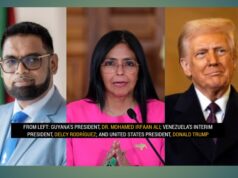
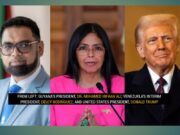





The new military cooperation agreement signed between the United States of America (USA) and Venezuela has caused quite the uneased amongst Guyanese. This reality is owed to the fact that Venezuela continues to claim territory that historically and rightfully belongs to Guyana. The main concern is that America’s shifting alliance may leave Guyana in a precarious position.
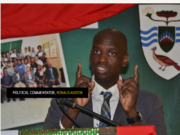
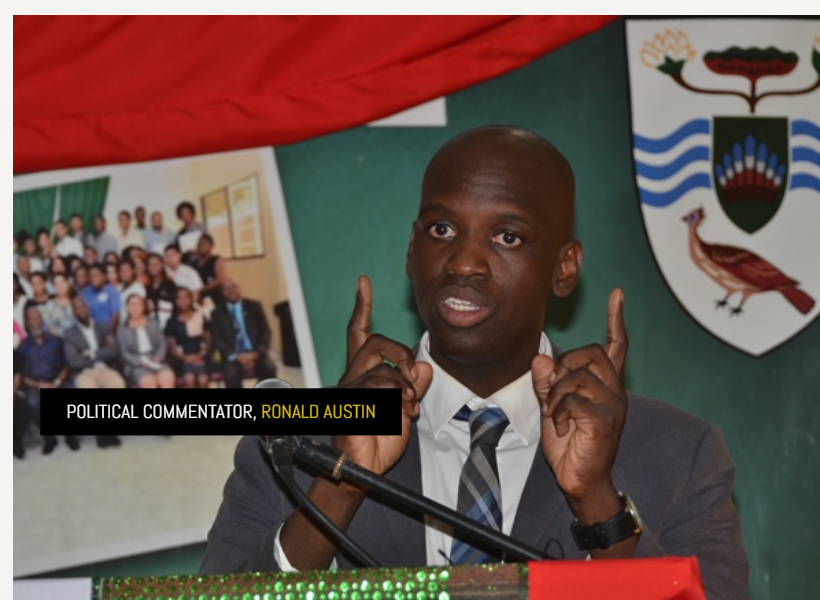
Ronald Austin, a learned political commentator, is of the opinion that it is not at all farfetched to assume that America may ask Guyana to defer from its not a blade a grass position. In fact, via a Facebook post, Austin suggested that Guyanese should “start preparing your minds for all kinds of possibilities” as Guyana is not postured to deliver a firm “no” if Washington demands negotiations with Caracas.
Further, in another post, the Guyanese analyst regarded scant importance to a statement posted by the American Embassy in Guyana yesterday which noted that the USA’s position in support of Guyana’s territorial integrity has not changed.
He questioned, “Did you really go to bed and sleep comfortably because the US Embassy issued a statement on the security of our territory?”
Austin said that his understanding of international affairs does offer him peace of mind following such a relatively low-level response.
He asserted, “A US Embassy sits at the lower end of the American foreign policy hierarchy. While embassies carry out day-to-day activities directed by the State Department, the White House dictates high-level foreign policy decisions and can easily override or reverse efforts made at the embassy level.”
Austin admitted, “Yes, there is often coordination between the White House, the State Department, and local embassies”. But was emphatic that, “to the extent that statements offer any guarantee, an embassy statement is the weakest form of security assurance you can get. You cannot take that kind of statement to the security bank, just ask Volodymyr Zelenskyy in Ukraine.”
Austin opined, “Our true security guarantees must rest in our own foreign policy strategy, which should not be exclusively tethered to a protective, avuncular relationship with the United States. We need to actively pursue broader multilateral partnerships with Brazil, the European Union, ASEAN, and the African Union, backed by vigorous shuttle diplomacy.”