




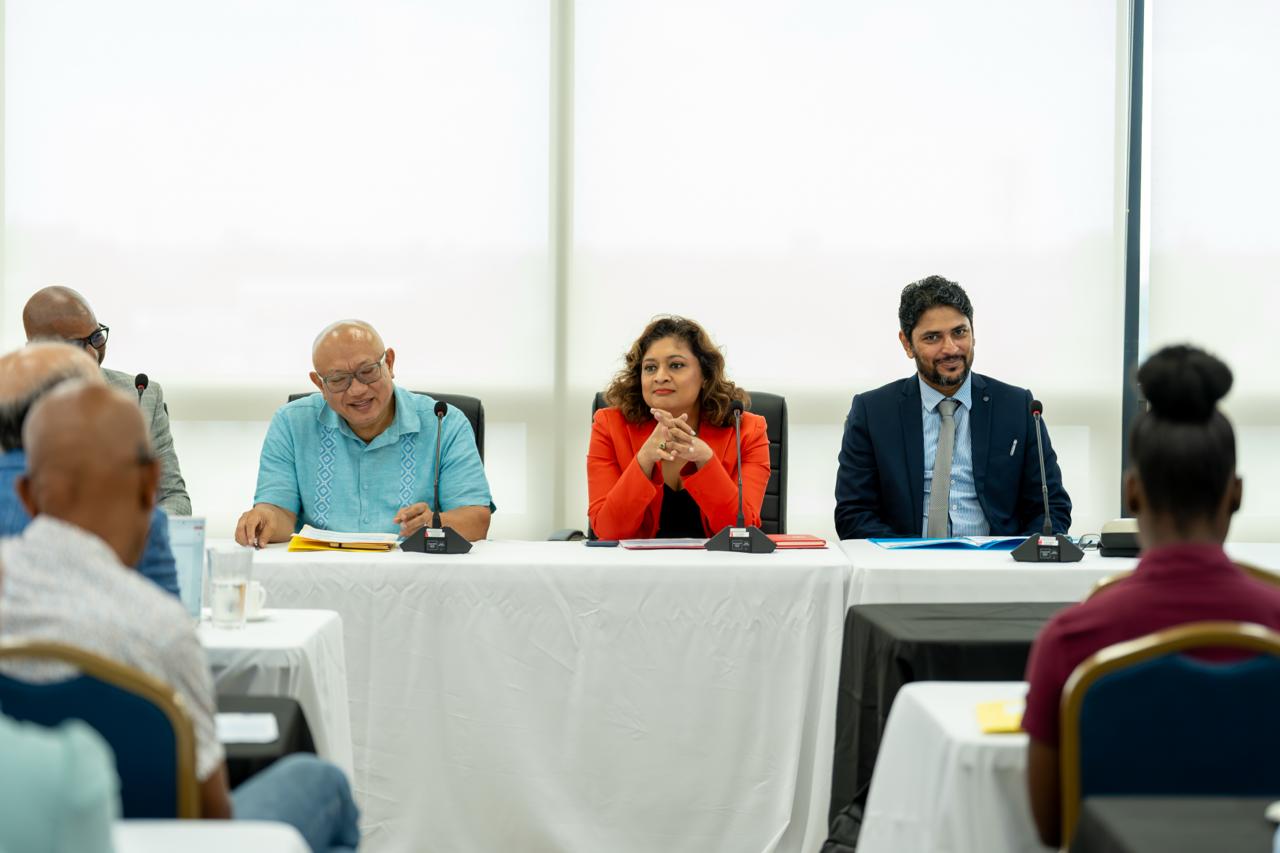
The Ministry of Local Government and Regional Development, with support from the United Nations Development Programme (UNDP), on Wednesday convened a validation workshop for Guyana’s draft National Solid Waste Management Strategy and Action Plan at the World Trade Center, Georgetown.
The workshop brought together stakeholders to review the proposed five-year strategic plan, provide recommendations and identify opportunities for collaboration towards establishing a more comprehensive, sustainable and effective approach to solid waste management across Guyana.
Also in attendance were Permanent Secretary Miguel Choo-Kang, Deputy Permanent Secretary Godfrey Munroe, Director of Sanitation Satrohan Nauth, UNDP Officer-in-Charge Dhiraj Singh, representatives of the United Nations Development Programme (UNDP), and other key stakeholders involved in the development of Guyana’s National Solid Waste Management Strategy and Action Plan, with UNDP Guyana Programme Analyst Colin Mattis serving as facilitator.
Delivering the feature address, Minister of Local Government and Regional Development, Priya Manickchand, emphasised that effective solid waste management requires a collective effort involving central government, local democratic organs, the private sector, international development partners, households and individuals.
The Minister highlighted the need to move away from longstanding practices and bad habits of improper waste disposal, acknowledging that some of these practices developed during periods when communities lacked adequate resources, equipment and access to organised waste collection and disposal services.
However, she stressed that changing these practices must now form a central part of the country’s approach to solid waste management.
Moving towards a circular economy
Minister Manickchand underscored the importance of transitioning beyond conventional waste collection and disposal towards a circular approach that recognises the economic and environmental value of solid waste through recycling, composting and other resource recovery opportunities.
She noted that the national strategy must be informed by detailed assessments of individual communities, including the volume of waste generated, the resources required to manage that waste and opportunities for recycling and composting.
The Minister also highlighted the potential for composting to complement Guyana’s agricultural development ambitions, including the use of organic waste to support agricultural production and school gardens.
She emphasised that the five-year strategy must establish clearly defined objectives, measurable deliverables and associated costs, providing the country with a clear understanding of the direction in which solid waste management is headed.
Strengthening solid waste management infrastructure and enforcement
Minister Manickchand outlined several interventions already undertaken by the Government to strengthen solid waste management across the country.
These include the provision of garbage compactor trucks to municipalities and Neighbourhood Democratic Councils (NDCs) where such equipment can be utilised effectively. Central government has also provided financial support for the operation of these vehicles, including expenditure associated with drivers, fuel and maintenance.
Additionally, eight new landfill sites are being developed across the country as the Government moves away from traditional dumpsites towards properly managed waste disposal facilities.
The Minister explained that these facilities are intended to facilitate the treatment of solid waste, recycling and composting, while preventing waste from re-entering waterways, contaminating land and affecting residential communities.
She also highlighted the Bill recently laid in the National Assembly that aims to amend the Environmental Protection Act so as to strengthen enforcement by expanding the scope of persons authorised to enforce regulations, institute charges and prosecute offences relating to improper waste disposal. She also committed to having the Integrated Solid Waste Management Bill laid in the Assembly before the end of the first quarter in 2027.
Georgetown’s solid waste management plan
As part of the wider national effort, Minister Manickchand highlighted the recently introduced Georgetown Solid Waste Management Plan, which addresses several longstanding challenges affecting garbage collection and sanitation in the capital city.
Among the issues identified were contractors failing to adhere to collection schedules, the discontinuation of parapet waste collection since 2017, inadequate monitoring of contractors and the absence of organised garbage collection services in certain communities, including Sophia.
Interventions undertaken to address these challenges include:
- Strengthening contractor accountability through financial penalties for missed collections;
- Reintroducing parapet waste collection in collaboration with the Mayor and City Council;
- Placing monitors across all 15 constituencies in Georgetown to oversee garbage collection, contractor performance and illegal dumping;
- Providing electric bicycles to support community monitoring; and
- Extending garbage collection services to previously unserved communities.
Minister Manickchand explained that the approach adopted in Georgetown, which involves identifying specific challenges and developing targeted solutions, will be extended across the country.
Education and behavioural change
The Minister placed particular emphasis on education as a critical component of achieving sustainable improvements in solid waste management, noting that longstanding habits must not be passed on to future generations.
She highlighted the Ministry’s collaboration with UNDP on a training-of-trainers programme intended to strengthen solid waste management education within secondary schools, with the eventual aim of extending these efforts to primary schools.
The initiative is intended to equip young people with the knowledge necessary to understand the importance of responsible waste disposal and its implications for their communities and the environment.
National Solid Waste Management Strategy and Action Plan
The draft National Solid Waste Management Strategy and Action Plan incorporates a diagnostic assessment of solid waste management in Guyana, an analysis of the existing regulatory and programmatic framework, and the conceptual design of the national strategic plan.
The Ministry has also solicited and received comments from several agencies to inform the development of the final draft.
Presented by UNDP Consultant Dr. Guillermo Roman Moguel, the strategy is structured around five key strategic areas:
- Strengthening institutional and regulatory frameworks;
- Implementing pollution prevention measures;
- Strengthening waste management controls;
- Developing circular economy and financing schemes; and
- Advancing communication, training and education.
The validation workshop provides stakeholders with an opportunity to examine the proposed interventions, assess their anticipated benefits, risks and impacts, and contribute recommendations towards the finalisation of the strategy.
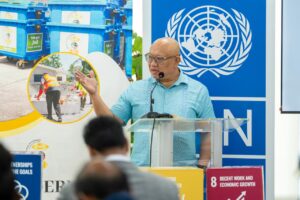
The workshop forms part of a wider technical mission, which also includes a solid waste management training workshop for regional government officers, consultants and non-governmental organisations.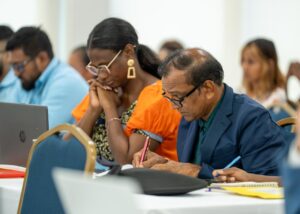
Minister Manickchand reaffirmed the Ministry’s commitment to implementing the strategy upon its completion, emphasising that the document must translate into meaningful and lasting improvements in the way Guyana manages solid waste.
“Anything we do, we must do it well. And if we’re going to look after garbage in this country, it will be done well,” the Minister stated.
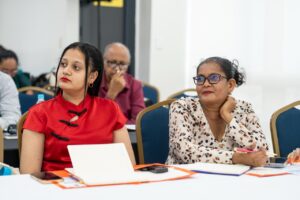
This initiative forms part of the continued efforts of the Government of Guyana, through the Ministry of Local Government and Regional Development, to strengthen solid waste management across the nation. (Source: Ministry of Local Government and Regional Development)