





The share of foreign-born people living in Guyana has nearly tripled over the past decade, according to preliminary results from the country’s 2022 national census.
Foreign-born residents accounted for 3.07% of Guyana’s population in 2022, up from 1.1% in the 2012 census, data from the Bureau of Statistics showed.
Guyana’s total population expanded significantly over the same period, rising to 878,674 in 2022 from 746,955 in 2012.
The census data point to a broader demographic shift taking place in South America’s fastest growing economy, where migration patterns have been influenced by economic pressures in the region.
Tens of thousands of Venezuelans have moved into Guyana over several years as part of a wider regional exodus driven by Venezuela’s prolonged economic crisis. Many have settled across Guyana, mirroring trends seen in neighbouring Caribbean and South American countries.
At the same time, Guyana’s economic fortunes since the start of oil production in late 2019 has drawn workers, entrepreneurs and migrants seeking opportunities linked to the oil sector, associated construction, services and logistics industries, and the broader economy.
The Bureau of Statistics cautioned that migrant numbers may be understated, as some foreign nationals are reluctant to participate in census exercises. This, the Bureau noted, is evident in the fact that while the census recorded 12,654 migrants, administrative records show 19,709 Venezuelans were registered during the period 2018-2022.
Guyana’s population overall grew by 17.6% between 2012 and 2022, a significant increase for a country historically plagued by decades of brain drain, with the strongest growth recorded in interior regions tied to mining.
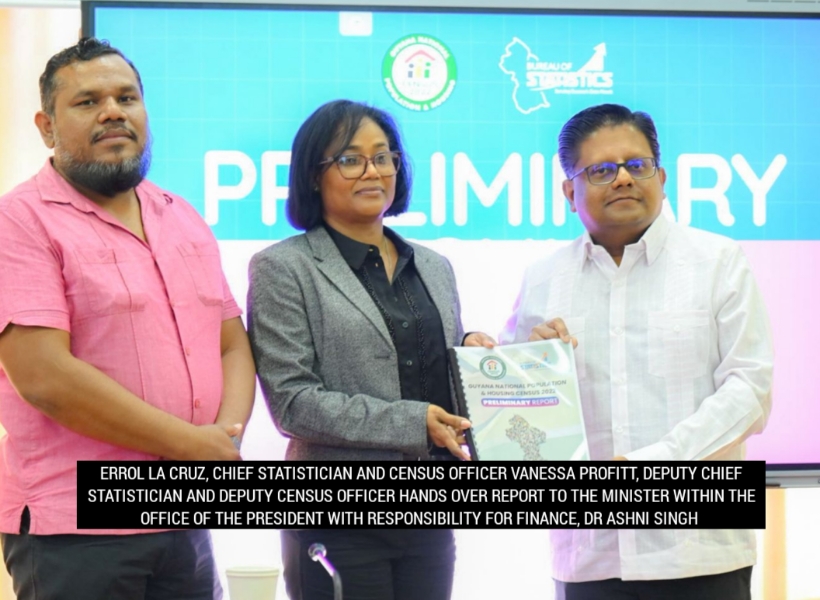
The Bureau of Statistics released the preliminary census report on Monday at a launch ceremony with the Finance Minister Dr. Ashni Singh, nearly three and a half years after the census was conducted. It said a more detailed report will follow.