



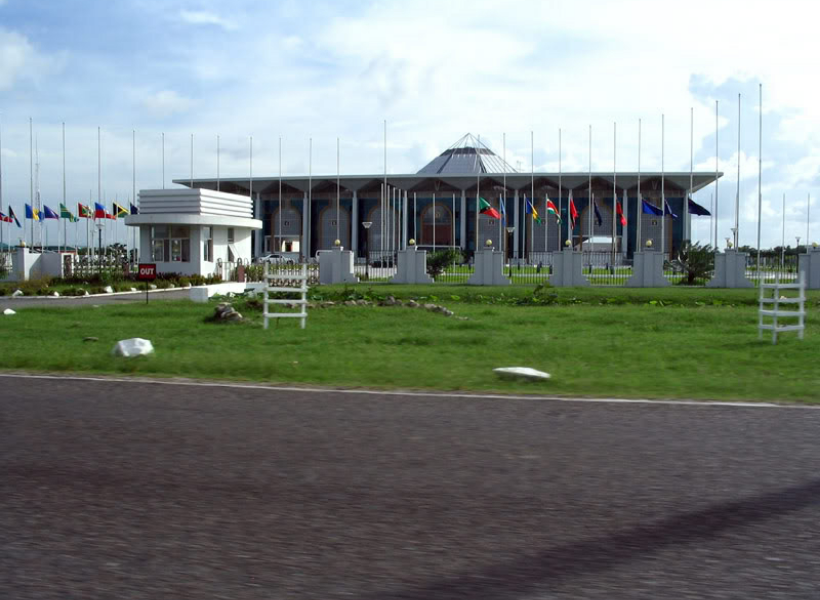
The United States and the European Union have expressed concern over the functioning of Guyana’s National Assembly, which has not met in over 90 days since the passing of the 2026 Budget. The diplomatic community has emphasized that active legislative oversight is critical during this period of rapid national transformation. Highlighting the necessity of continuous democratic checks and balances, the US Embassy’s official response stated: “A well-functioning parliament with legislative oversight is an important part of democratic governance. Such oversight is important to safeguard Guyana’s continued economic growth and transformation and represent the voices of its their citizens”
Adding weight to the international call for parliamentary activity, EU Ambassador Luca Pierotoni tied the resumption of legislative sittings directly to the country’s broader modernization goals. The Ambassador noted that regular legislative sessions are a shared value that underpins regional partnerships. In his statement, Ambassador Pierantoni noted: “We look forward to intensive parliamentary engagement that will enable Guyana to advance its ambitious reform agenda. The work of Parliament is essential in fulfilling the democratic principles shared by Guyana, the Caribbean Community and the European Union.”
The joint diplomatic response comes as the Forward Guyana Movement (FGM) ramps up its pressure on the government over the legislative freeze. On May 18, 2026, Amanza. Walton, Leader of the FGM and Member of Parliament, officially dispatched formal correspondence to several major regional and international organizations, raising alarms over the then 94-day parliamentary shutdown and broader democratic developments in the country.
Letters were sent directly to the leadership of the Caribbean Community (CARICOM), the Commonwealth Secretariat, the Commonwealth Parliamentary Association (CPA), the Inter American Commission on Human Rights (IACHR), the Inter Parliamentary Union (IPU), the Organisation of American States (OAS), and ParlAmericas, while also briefing the wider diplomatic community, including ABCEU representatives.
According to the FGM, the National Assembly has not been convened for a single sitting since the 2026 National Budget was passed on February 14, 2026. The opposition movement emphasizes that no formal resolution extending the recess has been published, and the administration has provided no public constitutional or procedural justification for the extended absence of parliamentary sittings. The movement contends that this prolonged failure to meet undermines the constitutional principle of representative democracy enshrined in Article 9 of the Constitution of Guyana, which vests sovereignty in the people through their elected officials.
The correspondence argues that the continued shutdown has effectively suspended meaningful legislative scrutiny at a time when institutional vigilance is most critical due to unprecedented petroleum revenues and major public expenditure. Beyond the lack of sittings, the FGM raised serious concerns regarding a broader pattern of democratic erosion, pointing to restrictions on media access to Parliament, the suppression of parliamentary speech, and the ongoing failure to constitute key parliamentary oversight committees, including the Sectoral Committees and the Public Accounts Committee, more than six months after Parliament reconvened following the 2025 General and Regional Elections.
In its appeal, the FGM has asked the international organizations to consider interventions consistent with their mandates, such as issuing public reaffirmations on the importance of regular sittings, calling for the immediate reconvening of Parliament, and monitoring domestic democratic governance standards. The movement clarified that these requests are not invitations for foreign interference in sovereign affairs, but rather an appeal for international bodies to uphold the democratic standards Guyana has voluntarily committed to as a state party to various international agreements.
The FGM noted that while the responsibility for protecting democracy ultimately rests with the people of Guyana and their constitutional institutions, the nation’s democratic trajectory remains a legitimate matter of regional and international concern. Emphasizing the financial high stakes of the current suspension, Walton stated: “A Parliament that does not sit cannot effectively scrutinize public spending, represent the people, or hold power accountable. At a time of unprecedented oil wealth, democratic oversight in Guyana should be expanding, not disappearing,” The FGM concluded by stating that it will continue to pursue all lawful, democratic, and institutional avenues available to ensure that parliamentary democracy, transparency, accountability, and constitutional governance are preserved and protected.