


The officer handling distress alerts at the Timehri Control Tower sent the coordinates of the MV Barima’s emergency beacon to the Coast Guard eight minutes after the first satellite message arrived, the Commission of Inquiry heard on Wednesday.
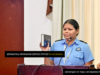
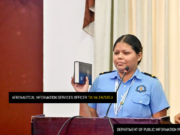
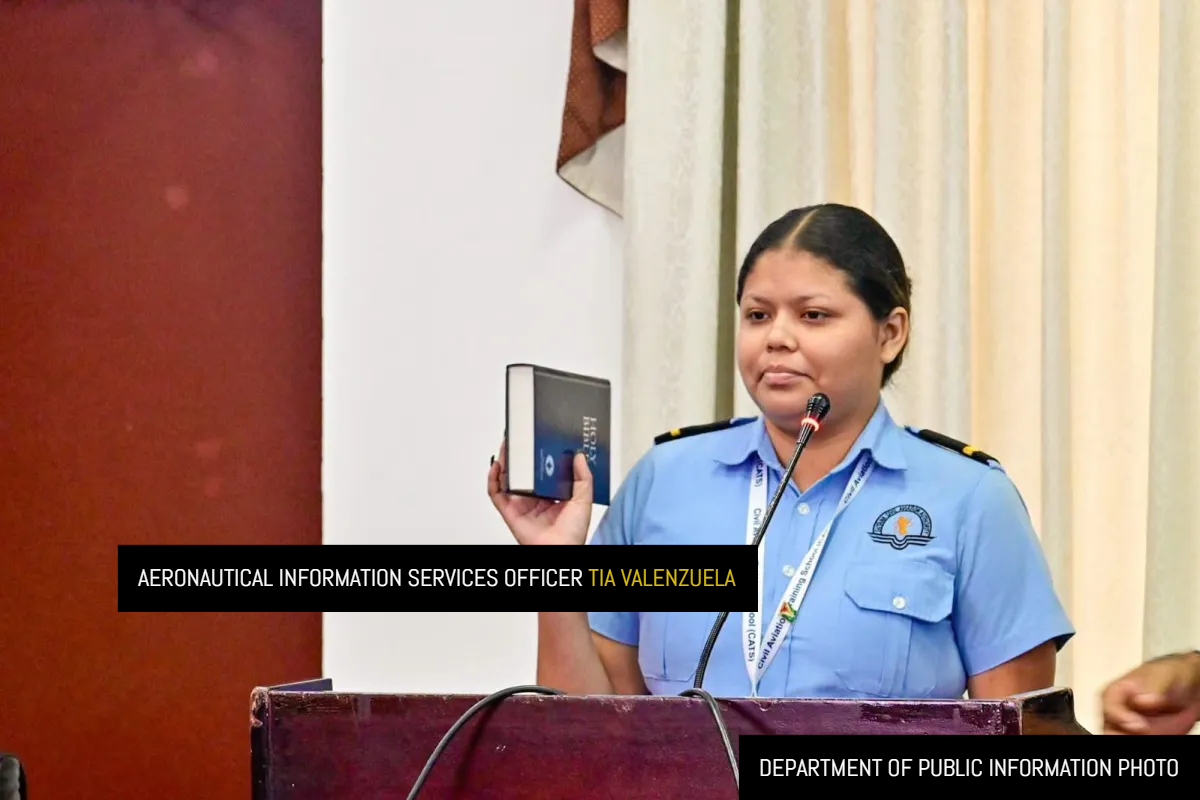
Aeronautical Information Services Officer Tia Valenzuela, who was on duty that night, testified that the first alert arrived from the United States Mission Control Centre at 10:43 p.m. on July 18.
At 10:51 p.m., she sent the coordinates by WhatsApp to the Guyana Defence Force Coast Guard’s operations mobile, which responded within one minute.
Her testimony provided a detailed, first-hand timeline of the communications handled at the tower.
Director of Air Navigation Services Rickford Samaroo, who testified first to outline the procedures for receiving and relaying distress alerts, said staff had subsequently advised him that MARAD, the Coast Guard and the lighthouse were notified within five minutes.
Valenzuela described the audible alarm that signals incoming distress messages.
“In the distress message mailbox, there’s a continuous beep that usually goes off loud enough for anyone to hear in the office. So once it’s continuous, we already know it’s a distress alert,” she explained.
She said further alerts arrived while she plotted the coordinates, and each message had to be acknowledged.
“If we don’t do it, the US MCC will eventually call us and ask us why we’re taking so long to respond. So, it’s a very timely operation,” she told the Commission.
The distress message carried the beacon’s unique identification, or HEX, code. Witnesses clarified in follow-up explanations that the beacon was registered in the United States, but the associated registration information did not identify it as being aboard the MV Barima.
After sending the coordinates to the Coast Guard, Valenzuela notified the lighthouse at 11:01 p.m. and Commander David Shamsudeen at 11:07 p.m.
At 11:13 p.m., the Coast Guard advised that one of its vessels was heading out. A formal email followed at 11:14 p.m., and Shamsudeen acknowledged at 11:23 p.m.
Commissioners also questioned Valenzuela about staffing at the tower. She said she was the only trained officer on duty that night, accompanied by two trainees, after a colleague had been permitted to leave early.
Asked how she managed the workload, she replied, “It wasn’t hard,” explaining that she was accustomed to handling several tasks at once.
Valenzuela said her responsibility was to relay distress alerts and document responses, not coordinate the search.
“We’re just responsible for sending the information to [the] GDF, Lighthouse, and Commander [David] Shamsudeen, and document their feedback,” she said.
She added that she had handled distress alerts before, “but not to this extreme.”
Her witness statement, including messages, was admitted into evidence.
The five-member Commission is chaired by Justice Godfrey Phillip Smith of Belize. (Department of Public Information)