





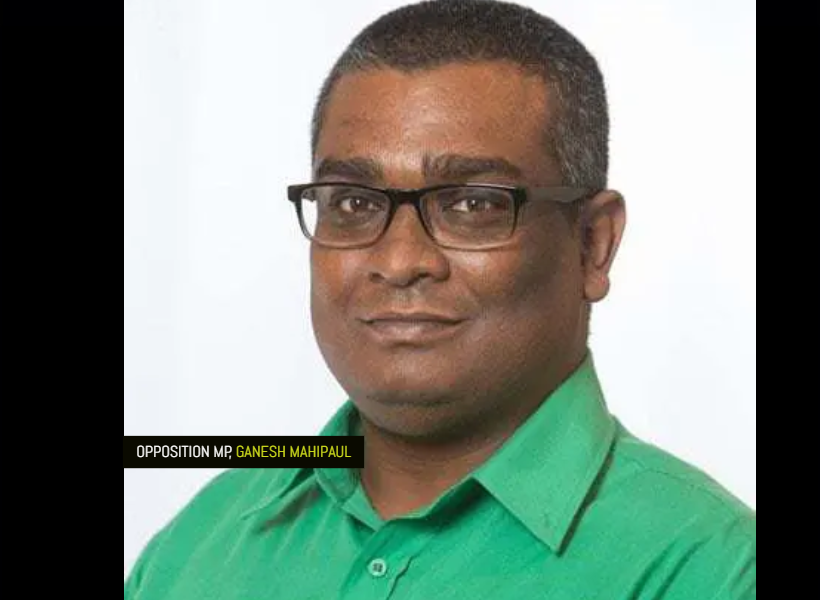
APNU Member of Parliament (MP) Ganesh Mahipaul has called on the PPP/C Administration to change course on governance, arguing that Guyana’s economic growth must be matched by stronger democratic institutions, greater accountability and protection for fundamental freedoms.
In a statement responding to content of the latest World Justice Project (WJP) assessment as reported by Kaieteur News, Mahipaul urged the administration to establish a National rule of law reform programme with measurable targets and regular reporting to Parliament and the public. This, he anticipates, will help correct findings by WJP to the effect that fundamental rights, like to freedom of expression, are being stifled in Guyana.
Mahipaul was keen to note, “Economic growth must never become a substitute for democratic progress.” He argued that development should be measured not only by revenue and infrastructure, but also by citizens’ ability to speak freely, access justice, question public officials and receive equal treatment under the law regardless of political affiliation or economic influence.
Mahipaul identified freedom of expression as a central concern, calling for safeguards against the intimidation of journalists, whistleblowers, civil society organisations, peaceful protesters and citizens who criticise public officials.
He said criticism of the president, ministers and other officials should be treated as a legitimate part of democratic life rather than an act of disloyalty.
“Public officials must answer criticism with facts, transparency and accountability,” he said, rather than hostility or efforts to discredit those raising concerns.
The APNU parliamentarian also called for stronger checks on executive power. He said opposition members must have meaningful opportunities to scrutinise public expenditure, question ministers, examine government contracts and investigate allegations of wrongdoing.
He urged the government to respect the independence of the judiciary and constitutional bodies, arguing that confidence depends on those institutions operating without political pressure or preferential treatment for powerful interests.
Mahipaul said Guyana’s expanding oil revenues made transparency in public procurement particularly important.
He called for greater publication of tender information, contract awards, project costs and effectiveness of oversight mechanisms alongside accessible electronic procurement systems. He also proposed disclosure of beneficial ownership where legally appropriate and impartial investigations into allegations of favouritism or corruption.
Concerns about procurement practices and project costs should be examined through credible evidence and independent processes, he said, rather than dismissed as political rhetoric.
Mahipaul further urged adequate support for the National Assembly’s Public Accounts Committee and other oversight institutions to examine expenditure and audit findings. He argued that delays in acting on audit recommendations weaken accountability and public confidence.
The MP said the same legal standards must apply to ordinary citizens, government officials, political supporters and influential business interests.
He called for fair investigations, protection against politically selective prosecutions and accountability for public officials regardless of their positions or connections.
His proposals also included investment in the justice system, legal aid and timely dispute resolution. He advocated credible, independent mechanisms to investigate complaints against law enforcement officers, with disciplinary or criminal consequences where wrongdoing is established.
“The objective must be a justice system that works fairly and efficiently for ordinary Guyanese, not merely one that exists on paper,” Mahipaul said.
Mahipaul’s proposed national programme would assign responsibility for reforms to relevant institutions, establish measurable targets and require regular progress reports.
He also urged the government to examine the WJP’s underlying indicators, identify any areas of deterioration and publish an action plan addressing verified deficiencies.
Mahipaul acknowledged that the government could legitimately question aspects of an international assessment’s methodology. He recalled that, in October 2025, the administration had challenged aspects of the WJP assessment on the grounds that some underlying surveys came from earlier years.
However, he argued that methodological objections should not replace scrutiny of the substantive concerns.
“The appropriate response to criticism is not simply to challenge the messenger,” he said. “It is to examine the evidence, correct weaknesses and demonstrate that the country is moving in the right direction.”
Mahipaul said APNU would continue pressing for accountability and transparency, judging the government not only by its spending and promises but also by the strength of democratic institutions and public confidence in them.
“Guyana belongs to all of us, and its democratic safeguards must serve all of us equally,” he said.