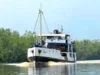




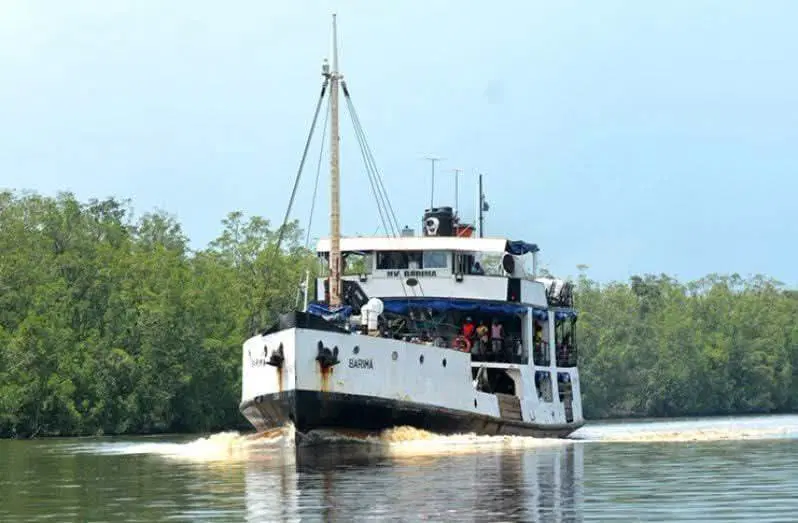
Marvin James told the Commission of Inquiry (CoI) into the sinking of the MV Barima on Thursday that he boarded the vessel without a ticket on July 18.
After he was aboard, he said a woman he believed to be a ticket attendant collected his $3,000 fare. He said she never issued him a ticket. Other survivors who had testified said they had either purchased their tickets in person or online days before the ship set sail.
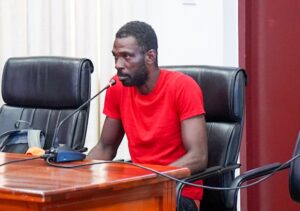
Commissioners questioned James closely about how he came to be aboard the Barima without a ticket.
He said a ticket attendant said the tickets had sold out but allowed him to board with his belongings. When approached later, he paid the fee with cash.
“So at no point did you have a ticket?” a commissioner asked.
“No, at no point I had a ticket,” James replied.
James could not say whether the ticket attendant collected money from other passengers. He described her as “short” but could not recall other identifying features. However, he told the commission that he would be able to identify her if he saw her.
James, who had travelled on the Barima before, said the amount of cargo aboard was greater than he was accustomed to seeing. He described goods being added, including items placed on the cargo hatch.
“It was more than normal,” he said.
James said he tied his hammock high to keep clear of people passing beneath him. From there, he could see the life jackets nearby. He described them as old and mildewed and said he saw a padlock securing the storage area.
He was asleep when the vessel capsized and recalled screams and the sound of cargo sliding and crashing as he struggled to get clear.
Asked whether he had any opportunity to grab a life jacket, he said: “I didn’t have the opportunity to grab nothing.”
After escaping, he held on to an icebox and was subsequently rescued and taken for medical attention at Charity Hospital.
Asked what he wanted the commission to take from his experience, James stressed the importance of taking government transportation services seriously.
“Transportation is a serious thing,” he said.
Another survivor, Nicholas Craig, told the commission that he had been travelling on the MV Barima since 2010. He recalled boarding with two bags and other packages and seeing the captain near the front of the vessel among goods including potatoes, onions and garlic.
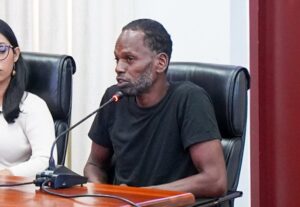
Craig, who was suffering from a broken hand and a broken leg at the time, said the quantity of goods appeared greater than on his previous journeys. He also recalled the vessel moving slowly, although he had no direct knowledge of any problems with its machinery.
“All we knew was that the boat was moving slow,” he told the commission.
The commission also heard from a young survivor, Alex Smith, whose reunion with his parents was overshadowed by the deaths of his sister and nephew.
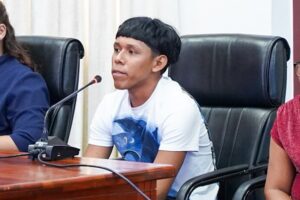
Alex Smith had been lying on the passenger-deck floor, listening to music through his earphones, when the Barima overturned.
With his mother, Roselle, beside him as he testified, he described how suddenly he found himself in the water. He could not clearly remember how he escaped the vessel. In the darkness, he saw no one he recognised.
He eventually held on to a box with several other passengers. When rescuers reached them, he said, they lowered a rope and pulled the survivors aboard one by one.
Asked how he felt when he saw his parents, Alex replied simply: “I feel good.”
His father, Grenville, had earlier described surfacing alone and spending about seven hours in the water before the Coast Guard rescued him. He, Roselle and Alex survived. Their 13-year-old daughter, Shamera Smith, and seven-year-old grandson, Aarav Daniels, did not.
Commissioners thanked Alex for giving evidence and acknowledged that the pain of the family’s loss would continue long beyond the hearing. (Source: Department of Public Information)