






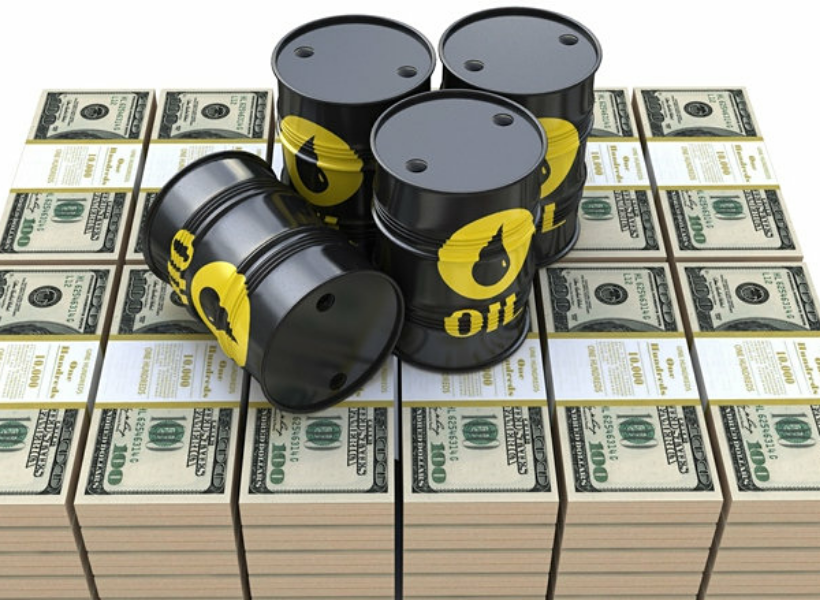
The price of Brent crude oil, against which Guyana’s crudes are traded, raised above US$90 per barrel in early March. This happened after fighting involving the United States, Israel and Iran raised fears in the Middle East and caused a significant reduction in vessel traffic in a critical oil trade route called the Strait of Hormuz.
The Strait is a waterway between the Persian Gulf and Oman that allows for a significant share of global crude exports. Brent crude, the international benchmark, traded around the US$92 per barrel on March 7, well above earlier market expectations for 2026.
For Guyana, the price spike presents both positive and negative impacts.
When presenting its 2026 budget, the government projected an average crude oil price of US$59 per barrel for the year, reflecting expectations of continued oversupply in the Atlantic Basin. Prices now trading more than $30 above that level could push the annual average higher if the conflict continues to tighten global supply.
A higher oil price generally means stronger earnings for the country. Guyana receives revenue from its offshore production through both oil sales and royalties paid into the Natural Resource Fund (NRF). Based on the US$59 price assumption, the government projected about US$2.35 billion in oil sales and US$375 million in royalties for 2026. Sustained higher prices could therefore increase the amount of revenue flowing into the fund.
However, higher global oil prices would also translate into higher fuel costs domestically.
Electricity generation depends on imported fuel used by the Guyana Power and Light (GPL). Rising fuel prices would normally increase operating costs for the organization. The government, however, prefers not to pass those higher fuel costs on to consumers, meaning electricity bills are expected to remain unchanged.
Drivers could feel the impact more directly through fuel prices at the pump, though the government has taken steps to cushion that effect over the years. The government reduced the excise tax on fuel to zero, a measure that has helped keep domestic gasoline prices among the lowest in the Caribbean. In July 2025, the Energy Chamber of Trinidad and Tobago noted that Guyana had the region’s lowest gasoline prices.
The evolving conflict and its effect on oil markets therefore create a mixed outlook for the country. How long prices remain elevated will depend largely on the duration of the conflict and how long market anxieties take to abate in its aftermath.