




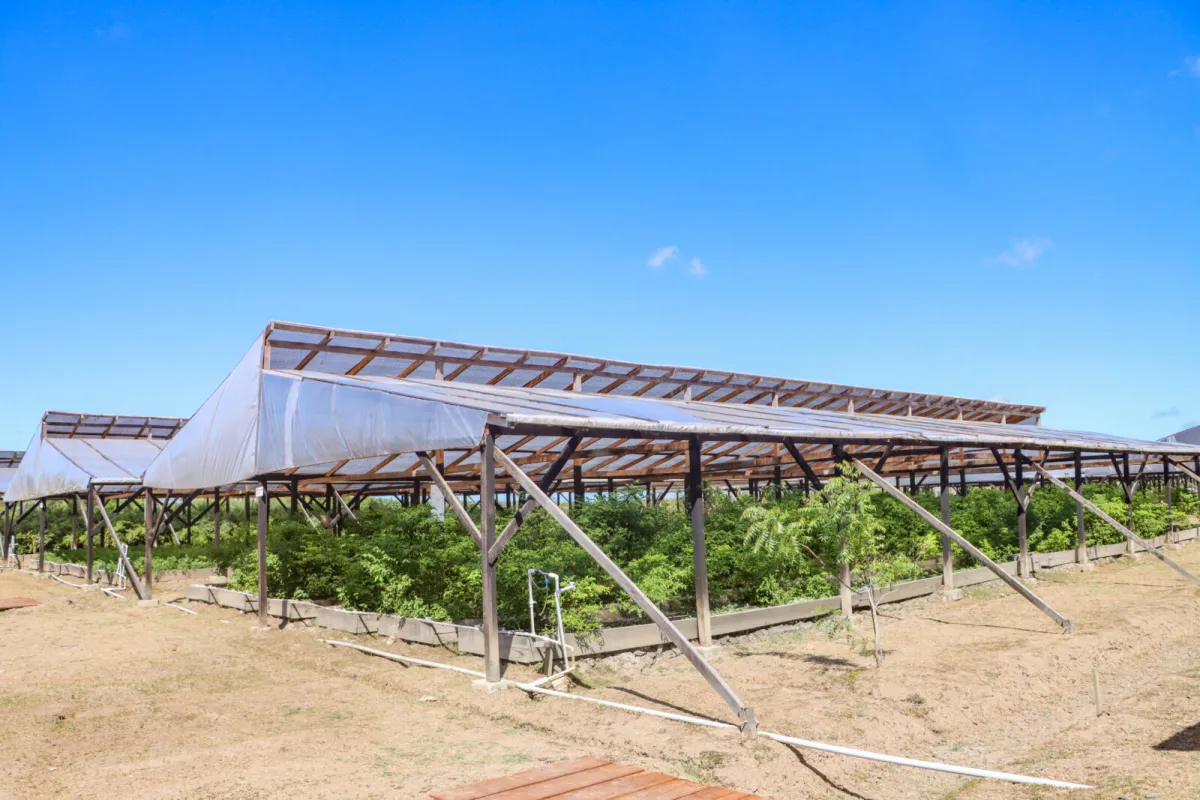
The shade house is now fully operational and provides a controlled environment for crop cultivation, allowing farmers to grow crops more efficiently while protecting plants from harsh weather conditions.

Community members have already begun cultivating crops such as thick leaf callaloo, celery, lettuce, and pak choi, with plans to expand production and possibly establish a small plant nursery to support agricultural activities within the village.
Technical guidance for the project is being provided by the National Agricultural Research and Extension Institute (NAREI), which has been assisting residents with irrigation systems and crop management to improve yields.
The initiative forms part of the government’s wider shade house programme, which was introduced to promote modern, climate-smart agriculture and expand the production of high-value crops across the country.
Through the programme, hundreds of shade houses have been constructed nationwide under the Agriculture Innovation and Entrepreneurship Programme (AIEP), encouraging community groups, farmers and young people to become involved in agriculture.
Since the programme was launched in 2021, more than 600 shade houses have been established across Guyana, supporting the cultivation of crops such as lettuce, peppers, herbs and other vegetables that can be grown year-round in a protected environment.
These structures help increase agricultural productivity, create income-generating opportunities for communities and contribute to Guyana’s broader goal of strengthening food security while reducing the region’s food import bill.
The shade house at Kuru Kururu is expected to play a similar role by enabling residents to cultivate fresh produce, supply local markets and expand community-based agriculture in the area. (Department of Public Information)