




The investigation into the tragic December 6, 2023, crash of the Guyana Defence Force (GDF) Bell 412 EPi helicopter, registration 8R-AYA, has revealed critical gaps in training and regulatory oversight. According to a leaked copy of the report, the aircraft was not listed on the GDF’s Air Operator Certificate (AOC) Operations Specifications and was instead being operated in the “Private Category.”
This distinction meant the flight was not governed by the stringent restrictions of a commercial AOC or the conditions of the GDF Flight Operations Manual. Furthermore, the investigation team could not determine the helicopter’s true payload for the fatal flight because no load manifest was available, leaving it unclear whether the aircraft was overweight at the time of the accident.
The flight originated from Base Camp Ayanganna in Georgetown at 9:23 am GST, destined for Arau Aerodrome near the Venezuelan border. After a technical refueling stop at Olive Creek, the helicopter encountered low scattered clouds in a mountainous area that quickly became dense and opaque, a condition known as Inadvertent Instrument Meteorological Conditions (IIMC).
Neither pilot possessed a valid instrument rating for the Bell 412 EPi or any other aircraft type. The report suggests that without adequate IFR training, the flight crew likely suffered from spatial disorientation and a loss of situational awareness, leading to the helicopter impacting trees 38 nautical miles northwest of Olive Creek.
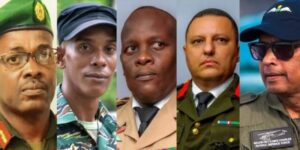
The impact and subsequent post-crash fire, caused by spontaneous combustion of fuel and hydraulic fluids, resulted in the deaths of the captain and four passengers. The victims were later identified as Lieutenant Colonel Michael Charles, Colonel Michael Shahoud, retired Brigadier Gary Beaton, Lieutenant Colonel Sean Welcome, and Warrant Officer Class Two Jason Khan. The co-pilot and a third crew member survived with burns and minor injuries. The third crew member, who was not wearing a seatbelt, managed to exit through a door that broke off during the impact and heroically pulled the co-pilot and one passenger from the wreckage. Sadly, the rescued passenger died during the night while awaiting extraction.
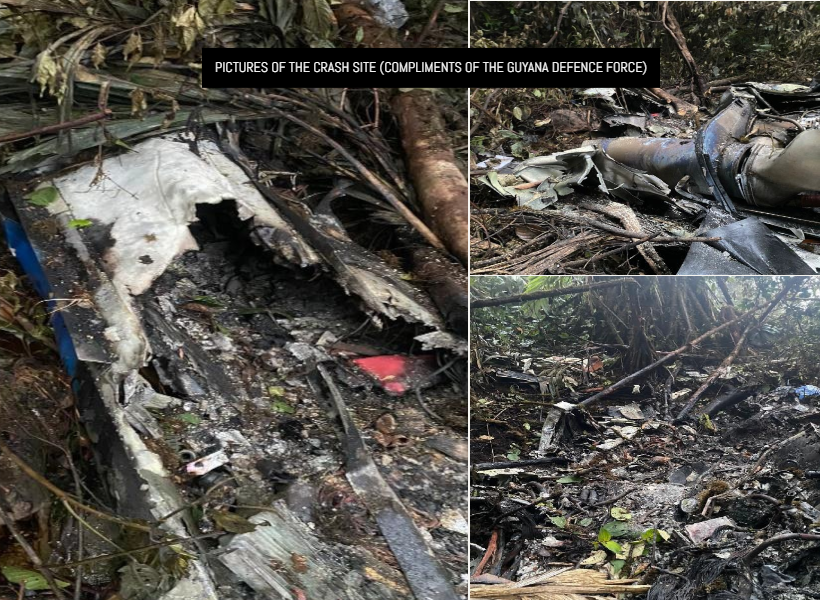
Rescue efforts were severely hampered by the rough, heavily forested terrain and inclement weather, which prevented GDF Special Forces from inserting a team until the following day. It took another day for all personnel and the deceased to be extracted by helicopter. The accident investigation team faced similar hurdles, ultimately determining that the site was too dangerous to visit personally. They relied on photographs and the recovery of the “black box,” which contained both the Flight Data Recorder (FDR) and Cockpit Voice Recorder (CVR). Although the recorder was damaged by fire and impact, it was sent to the NTSB laboratory for retrieval. However, the cockpit recordings were largely obscured by engine and rotor noise, and no data was captured from the crew’s microphones.
A significant human factor identified in the report was the “steep cockpit gradient,” a term used to describe the wide disparity in military rank and experience between the captain and the co-pilot. This hierarchy led to unacceptable crew resource management, where communication and coordination failed during the emergency. Investigators also noted that the only recorded defect prior to departure was an unserviceable weather radar, meaning the aircraft’s engines and avionics were otherwise operating optimally. The report also pointed out that the Guyana Civil Aviation Authority (GCAA) lacked a flight operations inspector current on the Bell 412 EPi, highlighting a lack of proper regulatory surveillance for the state’s specialized fleet.
In its safety recommendations, the report emphasized that the GDF must immediately implement instrument rating and crew resource management training for all pilots operating this helicopter type. It also urged the GCAA to train its inspectors to ensure adequate safety oversight. The findings clarify that the objective of the investigation is not to apportion blame but to prevent future tragedies.