




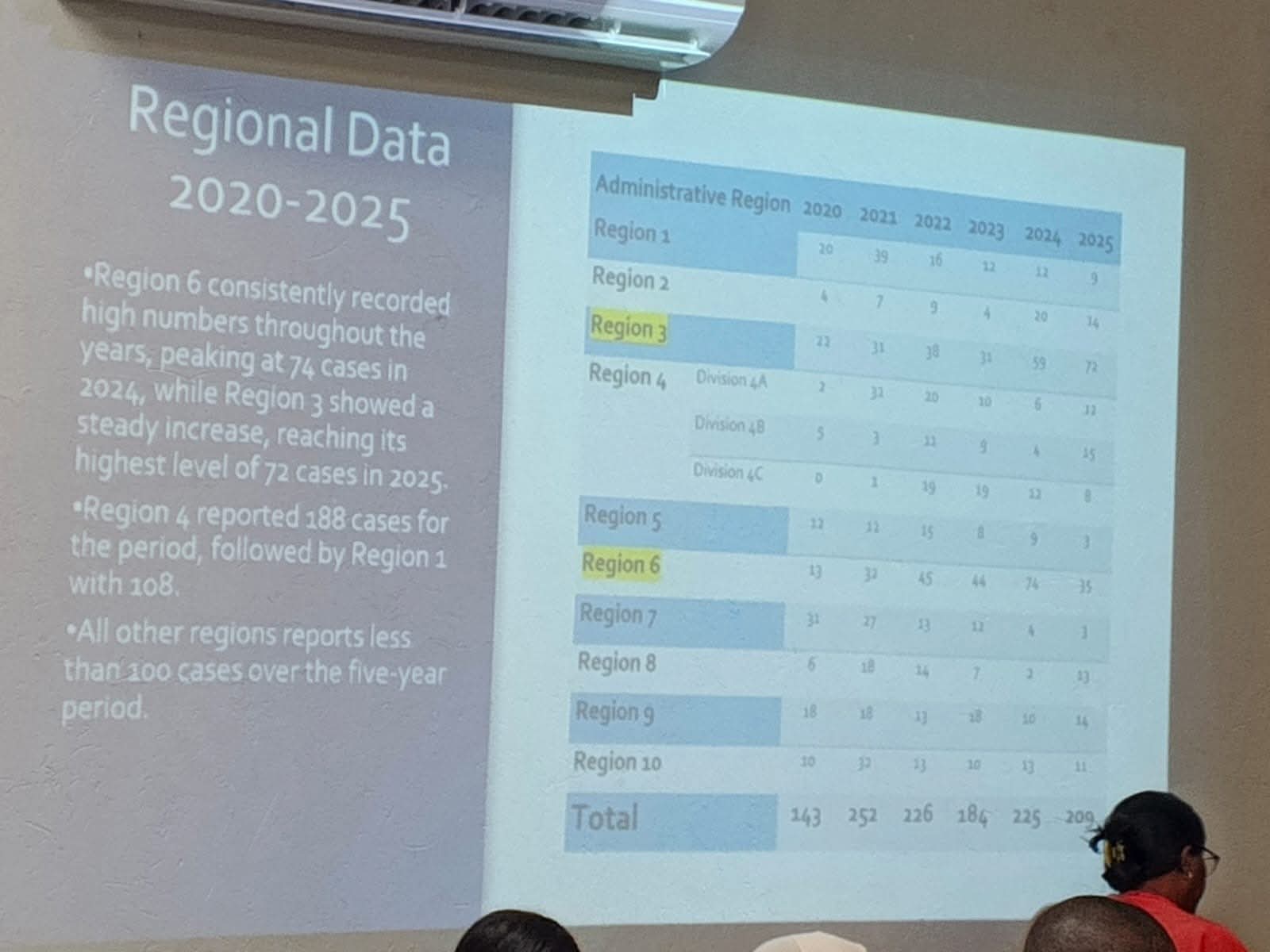
The Child Care and Protection Agency (CPA) and the Ministry of Human Services and Social Security revealed that 2022 recorded the highest number of reported child sexual abuse in Guyana. CPA Director Levine Gouveia noted that while figures for 2026 are currently partial, sexual abuse cases have remained consistently elevated since 2021. Region 4 leads the country in reported cases due to population density and access to reporting mechanisms, followed by secondary hotspots in Regions 3 and 6.
Conversely, lower figures in remote or “hush-hush” domains are being interpreted as under-reporting due to service delivery barriers rather than a lower frequency of incidents.
The demographic data shows a gender disparity, with girls accounting for the vast majority of reported victims. Adolescent girls between the ages of 14 and 18 are identified as the most vulnerable group, followed by those aged 8 to 13. Notably, 77.1% of victims are children below the age of 18. While boys are also affected, their reported numbers remain significantly lower, a trend officials say warrants targeted, gender-responsive prevention. The data consistently identifies perpetrators as individuals personally known to the child, including neighbors, family members, friends, step-parents, and community figures such as teachers or religious leaders.
In response to these findings, Minister Dr. Vindhya Persaud highlighted the implementation of the Family Violence Act of 2024, which replaces the 1996 legislation and introduces both civil and criminal measures.
The new law removes police discretion and mandates strict timelines, requiring the Guyana Police Force to determine if charges should be applied within 72 hours of a report.
Furthermore, the Sexual Offences Act has been bolstered by the inclusion of a Sex Offenders Registry. While the registry is housed within the office of the Commissioner of Police, the Minister clarified that it is accessible to the public through formal information requests.
Reporting mechanisms have also seen a digital shift. The 914 Hotline now receives approximately 40,000 calls annually, with roughly 30% related to violence and sexual assault. To supplement this, the Ministry launched the iMatter app, which provides 24-hour live chat support with survivor advocates.
These advocates are assigned to survivors to guide them through the legal process toward enforcement. Additionally, the “Hope and Justice Center” model, currently the only one of its kind in Latin America, consolidates police, medical, legal, and counseling services into a single “one-stop” facility to reduce the trauma of navigating multiple agencies.
Despite these advancements, operational challenges persist, particularly regarding police collaboration in remote areas. Issues include delays in responding to high-risk interventions, limited officer availability in rural districts, and difficulties in securing timely updates on investigations. While prosecutions have been successful in Region 8 over the last three years, Regions 1, 9, and 10 continue to face significant challenges. To address the behavioral roots of violence, the Ministry has introduced the “Bridging the Gap” policy and opened “Brave Centers,” such as the facility at West Central Mall in Region 3, where men can gather for conflict resolution and empowerment training.
Education and awareness efforts remain a primary pillar of the Ministry’s strategy. Dr. Cona Husbands reported that during Sexual Assault Awareness Month in April, teams targeted 47 schools and reached over 5,000 students and teachers. These sensitization programs also extended to health centers to ensure staff are equipped for the medical and forensic components of abuse response.
Minister Persaud emphasized that a multi-sectoral approach involving the private sector, where 20 companies are already training on a gender equality seal, and the public service is essential to creating an effective ecosystem that holds perpetrators accountable.