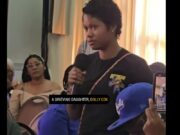
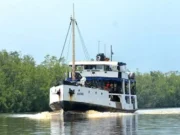



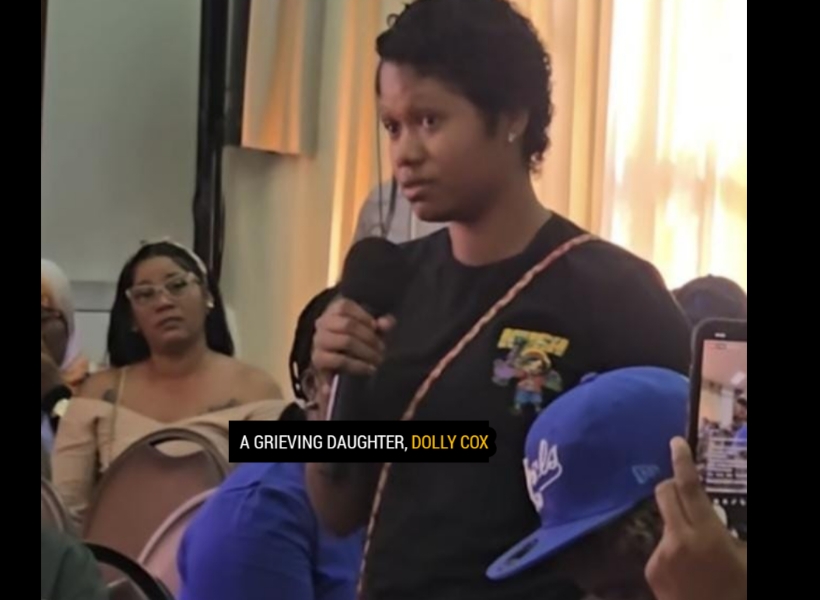
Emotions ran high at the Commission of Inquiry into the MV Barima tragedy as a grieving daughter, Dolly Cox, told commissioners she had no confidence that the process would bring meaningful answers, accountability or relief for families experiencing ineffable pain.
Relatives gathered to give their testimonies at the Commission of Inquiry (COI) on Wednesday.
Cox, whose father was among those aboard the vessel when it sank, said she was the last person to speak with him before the tragedy. She described their close relationship and said her father’s death or disappearance had placed a severe emotional and financial burden on her family.
“I’m here to say that I do not trust y’all,” Cox told the Commission. “I keep hearing promises and all are empty promises.”
She said that, since the sinking, she had accepted the possibility that she might never see her father or recover his remains. Cox said government workers had promised support for her ill mother, but that the assistance had not materialised.
“My father was the breadwinner and they did not help nothing,” she said. “My mother had to start working and she is sick. My father left four children in school that can’t go to school every day.”
Cox said her father travelled on the MV Barima because he wanted to establish a business for her. He was, she said, the only outboard engine mechanic in Port Kaituma, and his workshop helped sustain the household.
She described him as a committed parent who ensured that his children attended school regularly. Since his loss, however, she said the family has struggled to keep the younger children in school.
Cox said her father had also been constructing homes for his children. She said the family was told to submit a list of needed building materials, but had not received a response or assistance.
“They told us to send a list of material that we need, and still we didn’t get no reply,” she said. “They are not doing anything. And I don’t think y’all would do anything either.”
“What do I tell them?” Addressing the emotional impact on her younger siblings, Cox questioned how she could explain their father’s absence to them, particularly to her four-year-old sister.
“My sisters are here asking questions because they don’t really understand,” she said. “What am I going to tell them? What should I say to my four-year-old sister, “Daddy still in the sea?”
Cox said the family’s grief has been made more difficult because they have no grave at which to mourn. “Even if we want to carry flowers, we got to go to the seaside and drop the flowers in the sea,” she said. That’s how we got to grieve our father”
She said her mother, who had not worked since meeting Cox’s father because of illness, has now had to return to work. “I am angry,” Cox told the hearing. “I am angry because the same government that hire y’all to come and do y’all investigation is the same government that let that happen.”
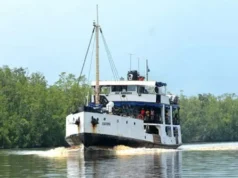
Cox argued that the tragedy could have been prevented. Recalling previous trips aboard the MV Barima, she said the vessel had experienced serious operational problems but was nevertheless allowed to continue operating.
She said she had once travelled on the ferry when a fire broke out in the engine room. According to Cox, the vessel continued to operate after that incident. On another occasion, she recalled, the engine failed and the boat was left drifting.