



– notes any validity of such claim would represent national dismemberment
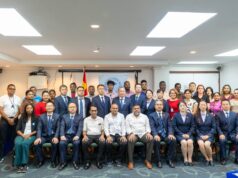
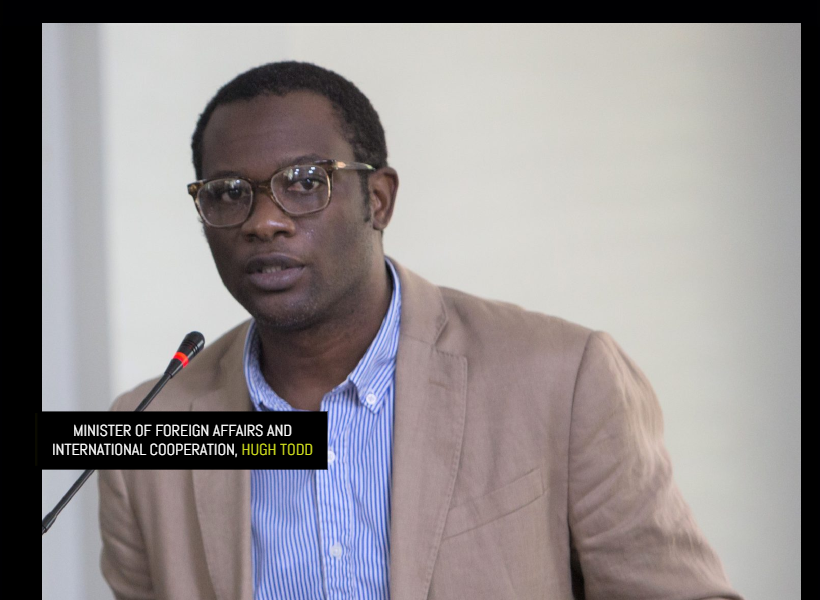
Guyana’s Minister of Foreign Affairs and International Cooperation, Hugh Todd, delivered his opening statement at the International Court of Justice (ICJ) on Monday, defining the territorial controversy with Venezuela as a matter of national survival with an “existential quality.” Addressing the Court during the oral hearings on the merits, Todd argued that Venezuela’s claim to the Essequibo region is a direct threat to the country’s territorial integrity, seeking to strip away more than 70 percent of Guyana’s land, a territory recognized as its own for over 126 years.
Minister Todd emphasized the human and emotional stakes of the legal battle, stating that the Guyanese people find the prospect of national dismemberment “tragic even to think about.” He warned the 15-judge panel that the loss of the region would entail the disappearance of its people, history, customs, and ecology, asserting that “Guyana would no longer be without them.” He noted that President Mohamed Irfaan Ali specifically mandated the delegation to highlight this existential threat to the international community.
The legal foundation of Guyana’s case rests on the 1899 Arbitral Award, which Todd described as “straightforward as it is consequential.” The Minister reminded the Court that the border was settled by a unanimous tribunal of eminent jurists following an exhaustive process that included 5,000 pages of arguments and 200 hours of oral submissions. He maintained that the 1899 Award and the subsequent 1905 Boundary Agreement remain legally binding, highlighting that Venezuela respected these boundaries in its own maps and legislation until 1962.
The proceedings also addressed recent regional tensions, with Minister Todd citing the “ominous growth” of Venezuelan military activity near the border. He pointed to the construction of new airfields and the deployment of heavy weaponry, alongside Venezuela’s 2023 referendum and subsequent legislative attempts to incorporate the Essequibo. Todd characterized these actions as a “blight on our existence as a sovereign state,” noting they proceeded despite the Court’s provisional measures prohibiting the escalation of the dispute.
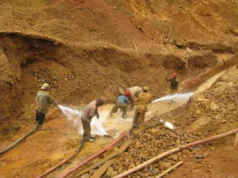
Ambassador Donnett Street followed the Minister by detailing the immense economic and social value of the disputed territory. She described the Essequibo as the “engine of our economic development,” home to 313,175 people, including nine Indigenous groups. Street argued that losing the region, which contains the “green heart of Guyana” in the Iwokrama Rainforest and critical mineral deposits, would constitute the “effective destruction of the country” rather than a simple border adjustment.
Guyana’s Agent, Carl Greenidge, concluded the opening remarks by grounding the claim in 17th-century history. He noted that Dutch settlers established the Essequibo colony by 1616, while Spanish outposts were “nowhere to be found” east of the Orinoco. Greenidge argued that Venezuela’s current challenge to the 1899 Award is “belated and totally unpersuasive,” particularly given that Venezuela itself originally sought the arbitration and celebrated the result as a triumph for six decades.