






My father, a former military man, was a stern disciplinarian. He was not the perfect father. Such a creature does not exist, but at least, he was a man of some principle. Among those was his belief that no one, not even his own kin, was incapable of committing a wrong. I once heard him say, “Me nah put meh head pon a block fuh no pickney. Yuh mek dem, but not dem mind.”
As a child, I disagreed with my father’s position. I thought that parents were expected to love their children unconditionally and stand by them through every circumstance. As a father now, I’ve come to realise that holding your child accountable, even when it hurts, is not an act of betrayal. Standing up for what is right, regardless of loyalty, is sometimes a kindness.
It should not be viewed as a betrayal if a child brings home a stolen item and a parent takes the necessary steps to ensure justice is served. It is merely an attempt to straighten the proverbial sapling before it becomes a tree.
But why do humans sacrifice truth or the quest for it at the altar of loyalty?
Like my father, I am not perfect. Loyalty still clouds my judgment. But there are times when the seriousness of a situation is enough to pull one back from the depths of irrationality. It usually appears as a thought: “Nah budday. Sum ting ain’t right deh, pardna.”
This must be the moment when our principles are truly tested. Perhaps the question, therefore, should not be why, but: “When do we stop sacrificing truth, or the quest for it, at the altar of loyalty?”
This very question comes to mind when one observes how we, as a society, respond to serious allegations involving those we admire, support or love. Take, for example, the recent developments surrounding President Irfaan Ali’s farm. As expected, the public’s response has been sharply divided.
Loyalists of the governing People’s Progressive Party/Civic (PPP/C) have largely dismissed the allegations against President Ali outright. On the other hand, those who oppose the President or his Government have issued statements of condemnation and penned epistles demanding answers and, in some instances, called for his resignation. Of course, there are a some who would actually prefer the resignation and not the answers.
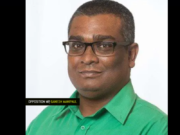
The Opposition Leader, Azruddin Mohamed, whose revelations about the President’s farm have dominated social media in recent days, is a U.S.-sanctioned businessman once cosy with the very administration he now detests. He has been accused of conspiring to commit money laundering and wire fraud in the United States, and of evading billions of dollars in taxes here in Guyana.
While the loyalists on both sides continue to claw at each other’s throats, weighing wrongs against wrongs, truth is the proverbial cheese that stands alone. It is as if the objective mind has become a lost relic, hidden beneath a Cloak of Invisibility in some alternate dimension on the edge of the expanding universe, slowly drifting towards a black hole.
It is quite similar to saying the West Indies Cricket Team is the best in the World or that Baby Skelo is the greatest dancehall artiste on this side of the planet just because we live here.
Of course, this, whatever it is, is not unique to Guyana. All over the world, people are willing to suffocate conscience because of loyalty.
Some even overlook the alleged and proven wrongdoings of politicians and regimes they support and admire, even if it means genocide and the illegal occupation of their neighbours’ territories.
In Guyana, those loyal to Azruddin Mohamed do not appear particularly troubled by the hot water in which he finds himself, yet they would not demand from him the same transparency and accountability they now crave from President Ali. Similarly, those who strongly condemn Mohamed will not be so quick to hold the President’s feet to the fire.
One side says, “Your President helped himself to farmland.”
The other replies, “But at least he is not a Sanctions Man.”
Instead of addressing the substance of the issues, each side simply points to the faults of the other.
The discussion then descends into
Whataboutism.
The conversations ultimately end where they began, with everyone defending their own and the quest for truth failing like a kangkawa at the seawall on Easter Monday.
This author is not suggesting that people should not support the political party or leader of their choice. That is their democratic right. However, supporting a politician should not mean refusing to ask questions. At the same time, opposing one should not mean turning a blind eye to evidence when it is presented.
This author is not against the idea, well, the reality of the President owning land or operating a farm. He certainly has the right to do so. Holding public office does not strip someone of the right to own property or invest.
But surely, he must have pondered at least once what would happen if the public took this the wrong way.
The real issue here is public confidence. This is why these allegations must be addressed openly and thoroughly.
This is also where Guyana’s institutions have an important role to play. If the President has complied with all declaration requirements, then there should be little difficulty in the Integrity Commission confirming as much. But that commission’s silence has done little to ease public concern. Instead, it has left room for speculation.
Perhaps, it should take a page out of the Guyana Revenue Authority’s book when it issued a statement confirming Mohamed’s alleged tax infractions.
But even Azruddin Mohamed, by holding the position of Opposition Leader and legislator, owes this country more than just talk of innocence. He must confront the serious allegations against him head-on. Arguing that the charges are politically motivated does not, by itself, prove him right. He must face the court in which these charges were brought and defend himself. His maneuvering does not portray a man who is confident of his innocence. In fact, it shows a man fighting tooth and nail to avoid the harsh questions. It reeks of fear.
Both Leaders are pleading for the public’s trust, but trust is like Carifesta Avenue. It takes forever to build, but evidence of works ongoing helps to inspire some confidence that it will be completed eventually, or before that lost relic returns from the edge of the universe.
Both men have an opportunity to provide greater assurances. Neither should expect blind loyalty.
Until then, my head is staying exactly where it belongs – on my shoulders, not on a block.