






Dear Editor,
Bharrat Jagdeo recently stated that the future of Guyana would involve the PNCR and the PPP/C working together “at some level and in some fashion”. This was an interesting call for cooperation, but he offered no indication of the framework through which such cooperation might be achieved.
Jagdeo pointed to the far-reaching constitutional changes enacted in 2001, when the two parties cooperated in reforming Guyana’s Constitution. He argued that these changes facilitated power sharing at the legislative level but not at the executive level, where an absence of trust remained a significant obstacle. In his view, without trust, executive power sharing at the time would have resulted in “policy paralysis”.
Over the past year, however, we have witnessed a series of actions by the PPP/C government that raise serious questions about its commitment to cooperation and inclusivity. These include:
Spending enormous sums of oil revenue without any national consensus on how much should be spent and how much should be saved, taking into account economic stabilisation in the event of future shocks and the principle of intergenerational equity.
Engineering the removal of Ms. Yonette Cummings-Edwards as Acting Chancellor of the Judiciary.
Preparing the national Budget without consulting the Opposition or the trade unions.
Refusing to engage the Opposition on the MV Barima tragedy and quickly appointing a Commission of Inquiry, thereby avoiding parliamentary debate on the matter.
Launching the Guyana Development Bank without Opposition representation on its Board.
If trust was lacking in 2009, the situation is arguably worse today. With virtually unfettered access to oil revenues, the PPP/C government has done little of substance to demonstrate an interest in working with others. Against this background, it would not be an exaggeration to describe Jagdeo’s recent call for the PNCR and the PPP/C to work together as shocking.
Power Sharing: An Old Idea in Guyanese Politics
It is worth recalling that discussions about cooperation, power sharing and what political scientists call consociational democracy are not new to Guyana. Previous efforts have included:
The PPP’s critical support for PNC policies in 1975.
Attempts to form a coalition government before the death of Forbes Burnham in 1985.
Discussions between Jagdeo and Corbin in the early 2000s concerning power sharing and political cooperation.
Both Jagdeo and President Irfaan Ali have recently referred to 1950. That period arguably represents Guyana’s closest, if not only, genuine experiment in power sharing.
Lijphart (1969) identified a common external threat as one of the conditions that could encourage power sharing. In 1950, the colonial power, Britain, represented a common adversary. Nevertheless, that experiment quickly unravelled under the pressures of “personal ambition, ethnic competition and foreign intervention” (Ramharack, 1992).
Since then, even the Venezuelan threat to Guyana’s territorial integrity has proved insufficient to compel the PPP/C and the PNCR to pursue power sharing.
Historically, whenever the PPP/C and the PNCR explored the possibility of working together, their combined electoral support likely exceeded 90 per cent of the electorate. That political landscape has now changed with the emergence of the WIN party.
Why Three Parties Change the Equation?
A second condition that Lijphart (1969) identified as favourable to consociational democracy is a “multiple balance of power”, rather than a “dual balance of power” or a situation in which one party enjoys clear hegemony.
Ironically, the emergence of a third significant political force may create conditions more favourable to power sharing than those that existed under Guyana’s previous
two-party-dominated political landscape.
However, this raises an important question: why did Jagdeo make no reference to WIN in his remarks?
Instead of describing the political landscape as bipolar, Jagdeo referred to the former dominance of the PPP/C and the PNCR as “binary”. He also suggested that both parties faced the prospect of extinction.
But why should the PPP/C face extinction when it holds the reins of government and commands financial resources of a scale previously unimaginable in Guyana? Where, precisely, is the threat to the PPP/C?
The Opposition Coalition Question
Jagdeo is acutely aware of Guyana’s political history. He understands that a coalition of opposition forces could pose a serious threat to the PPP/C’s continued dominance. Such coalitions contributed to the PPP’s removal from office in 1964 and again in 2015.
A united opposition could also threaten the political and economic arrangements that critics contend have enabled the preferential distribution of state resources to PPP/C ministers, political associates and other beneficiaries. More consequentially for those who may have accumulated wealth improperly during the past six years, a change of government could bring greater scrutiny and accountability.
Jagdeo has acknowledged that he thinks deeply about these matters every day. One might reasonably infer that the political consequences of losing power weigh heavily on his mind.
He may be willing to embrace new ideas and approaches, but that does not necessarily mean he is prepared to embrace new political actors as equal partners.
An Olive Branch with Strings Attached?
Let me be clear: Jagdeo has little interest in the survival or political resurgence of the PNCR for its own sake. His overture is better understood as an attempt to secure the PNCR’s cooperation in preserving the long-term dominance of the PPP/C.
His greatest political concern is the prospect of the PNCR in a broader opposition coalition capable of displacing the PPP/C from office.
And herein lies the likely explanation for Jagdeo’s extension of what might best be described as a dried-up coconut branch: an invitation to cooperate that offers no clear framework for power sharing, no credible commitments to institutional inclusion and no convincing evidence that the government is prepared to surrender any meaningful portion of its executive authority.
The critical question is therefore not whether the PNCR and the PPP/C should work together. It is whether Jagdeo is proposing genuine power sharing in the national interest or merely seeking a political arrangement that would protect his party’s dominance.
The answer is, to my mind, very clear. Jagdeo must wheel and come again. Cooperation without trust, institutional safeguards and a clearly defined framework for accountability risks is a strategy for political survival.
Yours faithfully,
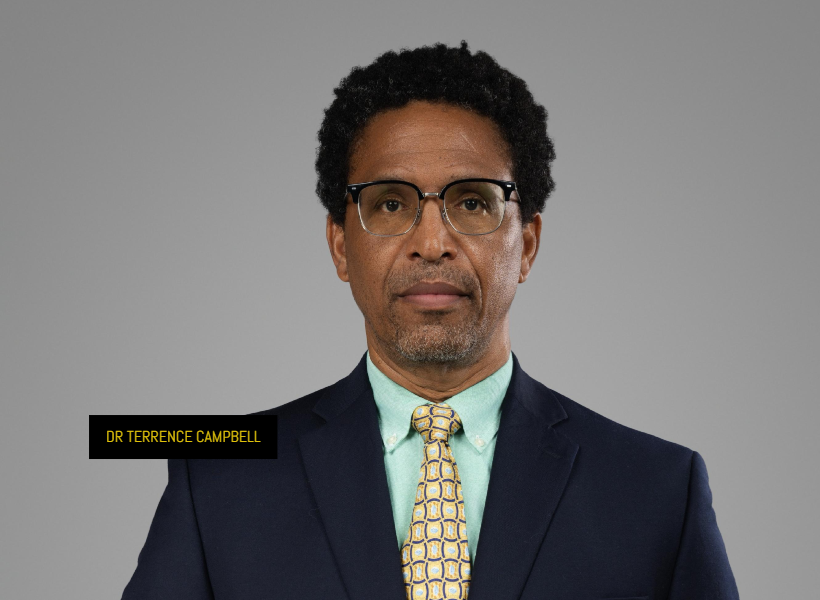
Terrence Campbell, M.P.