





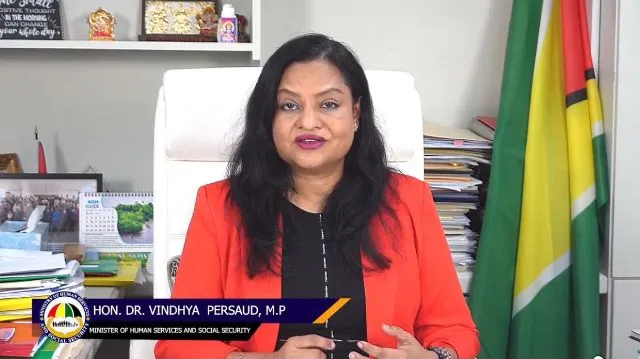
Minister of Human Services and Social Security, Dr. Vindhya Persaud, issued a stern warning to parents and guardians, stating that the law will be vigorously enforced against those found complicit or negligent in cases of missing children and statutory sexual offenses. In a direct address via her Facebook page, the Minister expressed concern over the increasing frequency of reports involving children, particularly young girls, who go missing. She emphasized that while the Ministry and the Guyana Police Force (GPF) intervene once a report is made, the primary responsibility for the safety and whereabouts of children rests within the home.
Dr. Persaud highlighted that many parents may not realize they can face criminal charges for failing to supervise their children effectively. She noted that the law provides for parents and caregivers to be charged with negligence if they are aware that their child is “sleeping out” or engaging in relationships with adults. According to the Minister, once a parent or guardian has knowledge of such situations and fails to intervene, they are legally liable. She stressed that she is not “making the rules” but rather reminding the public that these laws already exist and must be enforced to protect the nation’s youth.
Addressing the perpetrators of child exploitation, Dr. Persaud reminded the public that any sexual activity with a child under the age of 16 constitutes statutory rape, regardless of the circumstances. She warned men involved with minors that once a child undergoes a forensic interview and identifies them, the legal consequences will be severe. The Minister also took aim at family members who turn a blind eye to such exploitation, stating that those who know a child is with an older person and do nothing are “complicit” and will be held accountable.
The Minister noted that while the Guyana Police Force takes the lead in missing person investigations and the Child Care and Protection Agency provides follow-up support, government intervention is often reactionary. She urged parents to be more proactive by knowing their children’s friends, tracking their whereabouts, and building relationships with school welfare officers and teachers to ensure students are actually in the classroom. Dr. Persaud argued that there is often a “deeper problem” behind a child going missing and that opening channels of communication at home is the only way to identify these challenges before they escalate.
In her concluding remarks, Dr. Persaud acknowledged that her blunt message might upset some parents, but she maintained that “taking stock” of the parent-child relationship is a necessity. She revealed that the Ministry of Human Services is currently working on rolling out additional programs under its Missing Children Policy to address these issues more comprehensively. However, she reiterated that no single agency can solve the problem alone, calling for a collective effort that begins with parental accountability and ends with the full force of the law.