




“I used it [during] the last crop on a 13-acre land as a second and third dose, and we got a better yield than the other crop,” Singh stated. Adding, “we got 636 bags at 140 pounds in this 13-acre.”

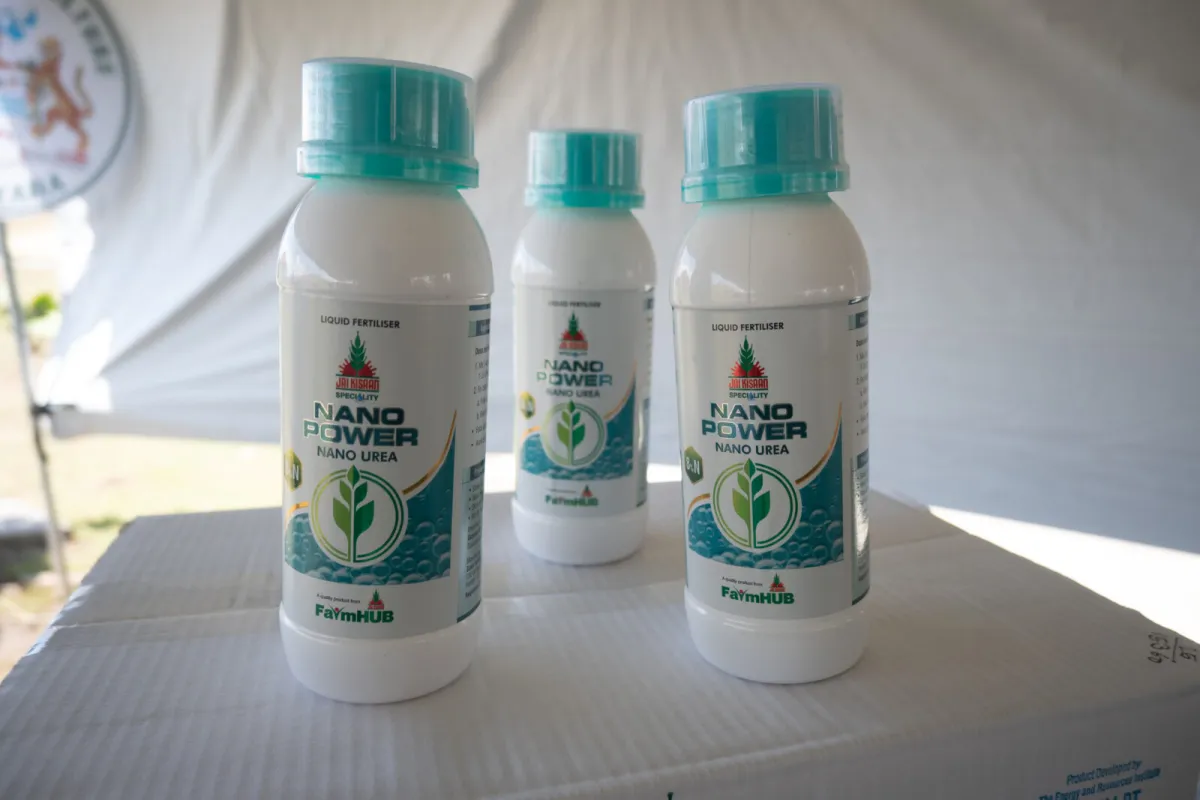
According to Singh, the Nano Urea proved to be more cost-effective, requiring only about half a litre per acre compared to a full bag of traditional urea. She noted that the liquid fertiliser was easy to apply and delivered better results.
Another farmer, Josiah Semple, explained that since he used the nano urea, he recognised an improvement in the quality of grain being produced.
“We noticed that we were not getting a quality amount of grains in the paddy development, but since I started using the Nano Urea fertiliser… I got more than I did with the other fertiliser,” the farmer underscored.
Semple further noted that he tested the Nano Urea on 10 acres of land, yielding 40 bags of paddy, as against to the 30 bags previously yielded with conventional urea.

Additionally, Semple shared that he later tried Nano Urea on a cash crop farm and noted significant changes.
“I tried it on the corilla farm that I have, and I noticed that it boosts the corilla and also kills the pesticides that try to attack it… and I was very surprised at that.”
Farmers who lack the mechanical capacity to conduct spraying on their farms, specifically in inclement weather seasons, Semple advised that the Nano Urea would be the ideal answer to their problems.
He noted it can be used simultaneously while spraying insecticides and also reduces labour costs.
Similarly, Amarnauth Mangru told the Department of Public Information (DPI) that he tried the Nano Urea during his last crop on 7½ acres of land and is pleased with the yield.

Mangru expressed appreciation to the People’s Progressive Party/Civic Government and the Guyana Rice Development Board for the exceptional work being done to assist farmers.
With the price of conventional urea remaining high, each farmer recommended the use of the Nano Urea fertiliser and urged other farmers to give it a try, noting that it has reduced costs, requires less labour, and improved productivity on their farms.
The fertiliser was launched on October 22, 2025, by the Ministry of Agriculture in collaboration with the Guyana Rice Development Board (GRDB).
It is more efficient in nutrient uptake, reduces wastages, and minimises environmental impact, potentially leading to higher yields and greater sustainability in agriculture.
It was introduced to Guyana in mid-2022 through a non-disclosure agreement (NDA) between GRDB and The Energy and Resources Institute (TERI). (Department of Public Information)