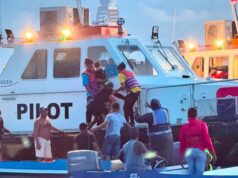






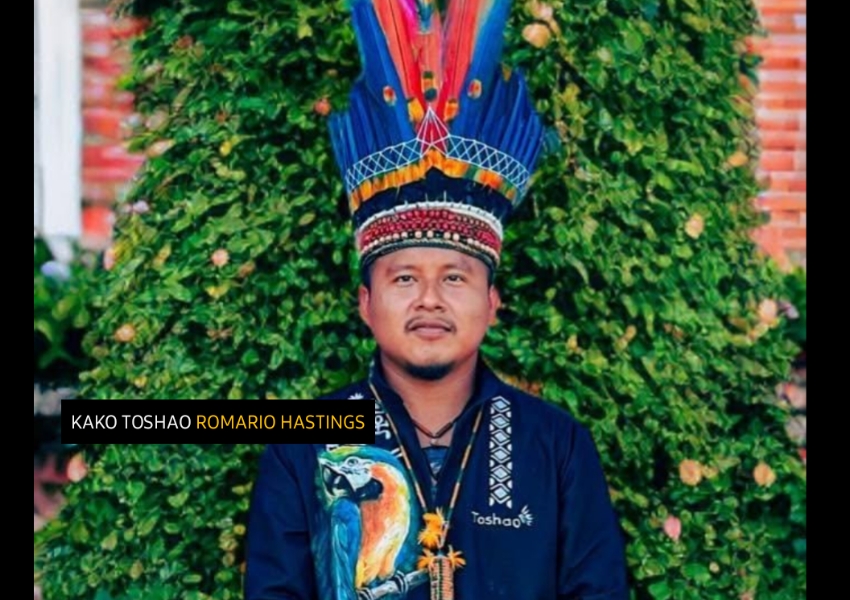
Romario Hastings, Kako’s Toshao, has publicly opined that political failures are behind the MV Barima tragedy and urged transparent accountability.
Hastings, in a statement, lambasted indigenous leaders, including himself, for being consumed by politics, which has led to their collective voices becoming compromised and weak.
“My Indigenous brothers and sisters, we have failed you. And when I say “we”, I do not speak only of Toshaos. I speak of all of us entrusted, in one way or another, with representing, protecting and advocating for our people,” hasting said.
In his statement, he explained that upon reflection, the incident reveals a network of decisions, institutional shortcomings, priorities, and relationships that have shaped both the tragedy itself and the nation’s response. He emphasized that the failure extends beyond individual acts or circumstances, pointing to the systemic role of politics in influencing every stage of the process.
Addressing the Indigenous community directly, Hastings expressed a profound sense of collective failure. He clarified that when he refers to “we,” he means not only the Toshaos but all individuals entrusted with representing, protecting, and advocating for their people. He lamented how, in recent times, the community’s collective voice has weakened due to preoccupations with political agendas, leading to fractured unity and diminished capacity to demand accountability.
Hastings laid bare the pervasive influence of politics, asserting that it is not simply a backdrop but a central force behind the tragedy. He highlighted how political decisions determined leadership appointments within key departments and ministries responsible for service delivery. These decisions influenced who was entrusted with implementing programs for Region One and how resources were allocated. The prioritization of projects, the competency of those involved, and the urgency with which longstanding issues were addressed, these were all shaped by political motives.
He stressed that politics had a hand not only in shaping the conditions leading up to the tragedy but also in the aftermath. It affects who is willing to demand accountability and who chooses silence, often out of fear of repercussions. Hastings pointed out that when praise is publicly given for successes, accountability must also be made visible, when failures occur, they must be acknowledged openly.
” Politics determine who chooses to remain silent. They cannot say they are doing things in the background because when praises are made in public, accountability must also be public!”
The Toshao argued that politics often lead to choices of access over principle, favor over conviction, and political comfort over responsibility. He expressed concern about the fear many Toshaos feel when speaking honestly, not because they lack care, but because challenging power comes with real costs. He revealed that every time accountability is sacrificed for political convenience, the community bears the greatest burden, and this realization was his breaking point, his greatest pain.
Hastings rejected the notion that the tragedy should not be politicized. He pointed out that, as a small population, their daily lives are shaped by political decisions made by others. To deny politics’ role in the crisis would be to ignore the forces that contributed to it. He affirmed that public office entails public responsibility, and accountability must be transparent and public. Leaders who celebrate successes publicly must also accept responsibility when failures occur.
“So, no one should tell us not to make this political.”
In a call for leadership and integrity, Hastings stated that if he were the Minister of Public Works, he would have resigned. Not because resignation alone could undo the loss of lives or solve all problems, but because true leadership involves accepting responsibility when things go wrong. He said sometimes, stepping aside is the most honorable act, allowing space for genuine reform, restoring public confidence, and safeguarding institutional integrity.
Hasting said that the community deserves nothing less than leaders willing to accept responsibility openly, prioritize principles over political comfort, and commit to meaningful change.
“Our people deserve nothing less.”