




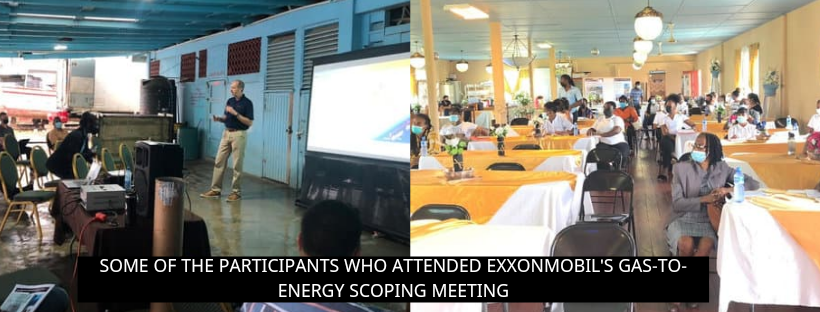
ExxonMobil Guyana yesterday kicked off its series of engagements across the coast to gather comments and questions that will determine the scope of the environmental impact assessment to be done for its US$900M gas-to-energy project.
The first scoping meeting was held on July 6 at the Latchmansingh Primary School in Region 5 followed by other sessions today at the Number 66 Fishport Complex and the St. Francis Japanese Hall, Port Mourant, Corentyne Berbice.
Guyana Standard previously reported that the company had applied for Environmental Authorization from the Environmental Protection Agency (EPA) for its activities under the project which include an offshore and onshore pipeline, a potential module offloading facility, and gas processing facilities.
The proposed project would bring associated gas from two ExxonMobil Guyana-operated projects offshore being Liza Phase One and Two via pipeline to onshore gas processing facilities. The pipeline would transport up to 50 million standard cubic feet per day of natural gas to the facilities. Maximum flow of pipeline is approximately 120 million standard cubic feet of gas per day.
An independent Environmental Impact Assessment to assess the potential direct and indirect impacts of the project will be conducted before construction begins.
Michael Persaud, ExxonMobil Guyana’s Environmental and Regulatory Manager was keen to note that the EIA process will evaluate potential environmental and socioeconomic impacts, propose strategies to manage or mitigate impacts, identify project benefits, and provide the factual and technical basis that would allow the oil company to make an informed decision on its application for environmental authorization.
He further noted that the company’s fundamental goal is to reduce environmental incidents to zero through a process of continuous improvement and the delivery of superior environmental performance.
With an estimated development cost of US$900M, the gas-to-energy project is designed to provide 250MW of power to the national grid, following its estimated operationalization period of late 2024. It is also estimated to create about 775 jobs. About 700 of these will be aggregate to the construction phase, while the remaining 75 are for the other aspects of the project life cycle.