






DEAR EDITOR
The problems with the Port Kaituma Wharf and Stelling can be explained very simply:
Imagine trying to build a house on soft mud instead of solid ground. No matter how well you build it, it will eventually start to sink or fail. That is essentially what happened here.
Here are the main issues:
The design was flawed. The consultant, CEMCO, designed the project, and the contractor simply built what was on the drawings.
The foundation was not secure. The long steel piles that were supposed to hold the wharf in place were not driven deep enough to reach firm ground. Instead, they ended up in soft mud, making the structure unstable.
The ground was unsuitable. The wharf was built on land known as “Log Pond,” where an old sawmill once operated. Buried beneath the surface are old logs, timber waste, and other debris. The ground should have been investigated much more thoroughly before construction began.
The soil testing was inadequate. Not enough test holes were drilled, and not enough samples were taken to properly understand what lay beneath the surface.
The wall was too heavy. The concrete retaining wall was larger and heavier than it should have been, placing extra pressure on the already weak foundation.
The support system was too weak. The steel rods and anchor piles that were meant to hold the wall in place were too small and made from the wrong grade of steel.
Too much fill material was placed behind the wall. The designers underestimated how much backfill would be needed. The extra weight increased the pressure on the retaining wall.
The supports failed. Some of the steel tie rods snapped under the pressure, causing sections of the retaining wall to collapse.
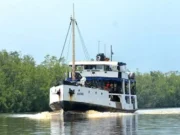
Temporary repairs were possible but were not done. Emergency works similar to those carried out at Kumaka could have been undertaken to allow vessels such as the Ma Lisha to berth safely, but that option was not pursued.
The contractor followed the plans. Based on these facts, the contractor was not responsible for the failure because the work was carried out according to the drawings and quantities prepared by the consultant.
In simple terms, the problem was not that the builder failed to construct the wharf. The problem was that the wharf was designed on faulty assumptions, with inadequate investigations and engineering mistakes. When a structure is built from a defective design, even good construction cannot prevent failure.
The bigger question is this: If CEMCO was responsible for such serious engineering failures at Port Kaituma, why does the company continue to be entrusted with major public projects in Guyana? Currently that same consultancy firm has oversight on the Gas to Energy Transmission and Substations network.
Yours faithfully,
Ganesh Mahipaul, M.P.