





After losing the 2015 General and Regional Elections, PPP/C’s honcho, Bharrat Jagdeo was among the first to recognise that the party needed to take a step back and reevaluate itself. To some, this was Jagdeo taking the loss like a champ and to others, it was an admission that the flock had lost its way; that it had become tired and in need of fresh perspective.
Jagdeo vowed that the party would return bigger, stronger and more focused on the what truly matters – the People. After all, it was the people who decided that 23 years of PPP/C was enough and craved change.
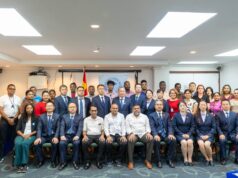
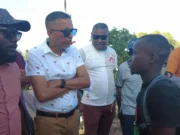
On the 2020 election campaign trail, Jagdeo spoke about the party’s intention to intensify efforts to reconnect with people at the grassroots level. He talked about going into communities, addressing issues head-on, and building rapport with the people. Six years later in government, the party continues its Cabinet Outreach Programme. Outreaches have already been held in Regions 2, 3, 4,5, 6 and Region 7.
One thing is absolutely certain about these exercises: citizens arrive in droves seeking assistance to issues affecting their daily lives. Some concerns are relatively simple, while others are so complex that the testimonial reels government ministries and agencies have been directed to produce do little justice to the realities behind them.
While most public sector service providers, including the two semi-autonomous utility agencies, GWI and GPL, offer online application options, some citizens are still unfamiliar with online processes, others may distrust them or simply feel more comfortable speaking directly with someone real and not a chatbot.
Consider a family that has just acquired a house lot. Before construction can begin, they need electricity and water and other necessary services including approvals from the relevant agencies. Ordinarily, that family may have to visit multiple offices, perhaps on different days, taking time away from work and incurring transportation costs. If additional documents are required, the process may involve several trips. At a Cabinet outreach, however, representatives from utility companies, ministries and numerous other institutions are gathered in a single location. Citizens can move from desk to desk and address multiple matters during one visit. This is what makes these events so beneficial to Guyanese.
Interestingly, this is not used in the government’s framing of the importance of these outreaches. And even if it has, it is not being stressed. In fact, the government sees these events as a means of conveying or proving that it is accessible, responsive, and attentive.
But it still does not really answer the question about what is actually fuelling these large turnouts.
It may be love and trust. At least this is according to the Public Utilities and Aviation Minister, Deodat Indar, who recently, at an outreach in Region 6, said that the large number of attendees is testimony of the public’s trust and love in the Government. He said that the number speaks to citizens’ belief that their concerns are addressed whenever they come to meet leaders directly.
If thousands of people attend outreaches to have their concerns addressed, then is it not reasonable to assume that there are thousands of issues that were not addressed? More importantly, why do thousands of Guyanese feel that the only way to get the help they need is to engage a minister directly?
The answer to why the turnout is so large may very well be the same as the answer to why people believe only a minister can resolve their issues: some thing is wrong with the efficiency in service delivery at the ministries and agencies.
In some cases, the issue may not necessarily be that systems are broken. It may be that they are perceived as slow, difficult to navigate, unresponsive, or ineffective. These are solid reasons for the Government to be careful about interpreting large turnouts solely as expressions of confidence and support.
The crowds that gather at these outreaches are not merely expressions of admiration. They are also expressions of need. For every resident seeking assistance, there is often a story behind the visit: perhaps an unanswered job/service application, a delayed response, a confusing process, or a land-related matter that has lingered unresolved for too long, or some “royal run-around, Jimmy Cock bring Ram-goat” story.
The fact is that citizens rarely spend hours waiting to meet ministers because everything is working smoothly in their neighbourhoods. They do so because they believe that direct ministerial intervention offers the best chance of resolving their problem. They are not saying, “We came because we love Government.” They are saying, “We came because you are our last resort.”
That distinction matters.
A mature government should view these outreaches as a diagnostic tool. Every complaint brought before a minister represents a question they should be asking their ministries and heads of agencies under their purview. Questions like:
1. Why did this issue reach this stage?
2. Why did this citizen feel compelled to seek intervention from the highest level of government?
3. Who or what is responsible?
4. How can we fix this?
Until then, Cabinet outreaches will continue to represent two realities at once: love and dysfunction. Yes, the outreaches are testimony to a government willing to engage directly with its citizens. But they are also a reminder that many citizens still believe the most reliable way to have a problem solved is to place it directly before a policy maker.