




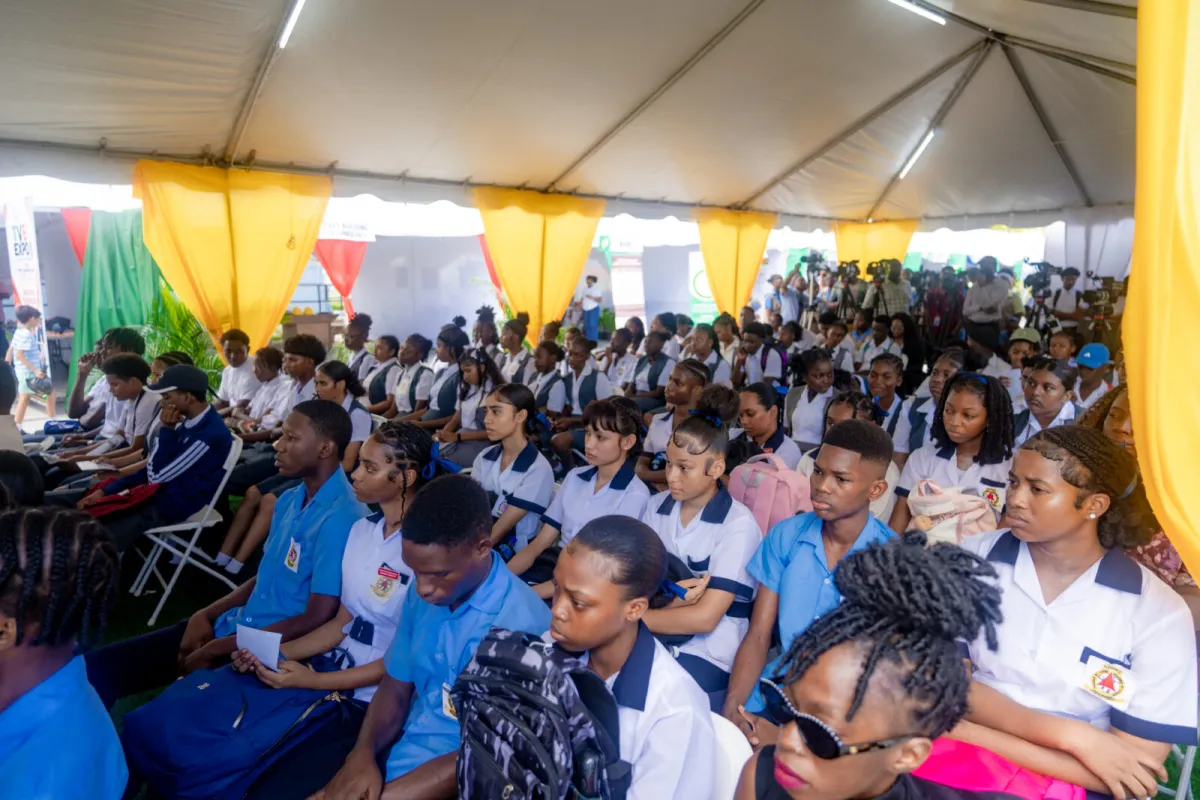
Minister of Education Sonia Parag made the declaration on Tuesday during the opening of the TVET Fair and Expo at the Arthur Chung Conference Centre (ACCC).

“The government has made a bold commitment that every region of Guyana will have a TVET centre by the end of 2026,” Minister Parag said.
She said partnerships help bring technical and vocational training closer to communities, including collaborations involving the Carnegie School of Home Economics and practical instruction centres.
The minister said the expansion is part of a wider effort to ensure Guyanese, particularly young people, can access training that leads to employment, entrepreneurship and greater economic opportunities.

“No modern country can be built by theory alone. Nations are built by people who can turn knowledge into action, ideas into products, and raw materials into things of value,” she said.
She urged students not to view technical education as being less valuable than traditional academic qualifications, noting that both pathways contribute to individual and national development.
“What you are doing to develop your skill in a particular area is no less than earning an academic qualification,” she said.
The minister acknowledged that technical education was once regarded as an alternative for students who did not pursue a traditional academic pathway.
She said that perception limits young people, diminishes the value of skilled work and fails to recognise the important contribution technical professionals make to society.
However, students pursuing TVET qualifications are also positioning themselves to compete internationally as Guyana continues to develop its workforce.
Meanwhile, the expanded TVET, guided by Guyana’s TVET Policy 2025-2035, sets out a 10-year framework for strengthening technical and vocational education.
The policy positions TVET as a foundation for economic growth, social inclusion and individual empowerment.
It also seeks to ensure training programmes remain aligned with sectors driving the country’s development, including construction, energy, climate-resilient agriculture, hospitality, manufacturing and digital technology. (Department of Public Information)